Dürkheimer Wurstmarkt: Why the World’s Largest Wine Festival Is Called a Sausage Market
Approx. 7 min read
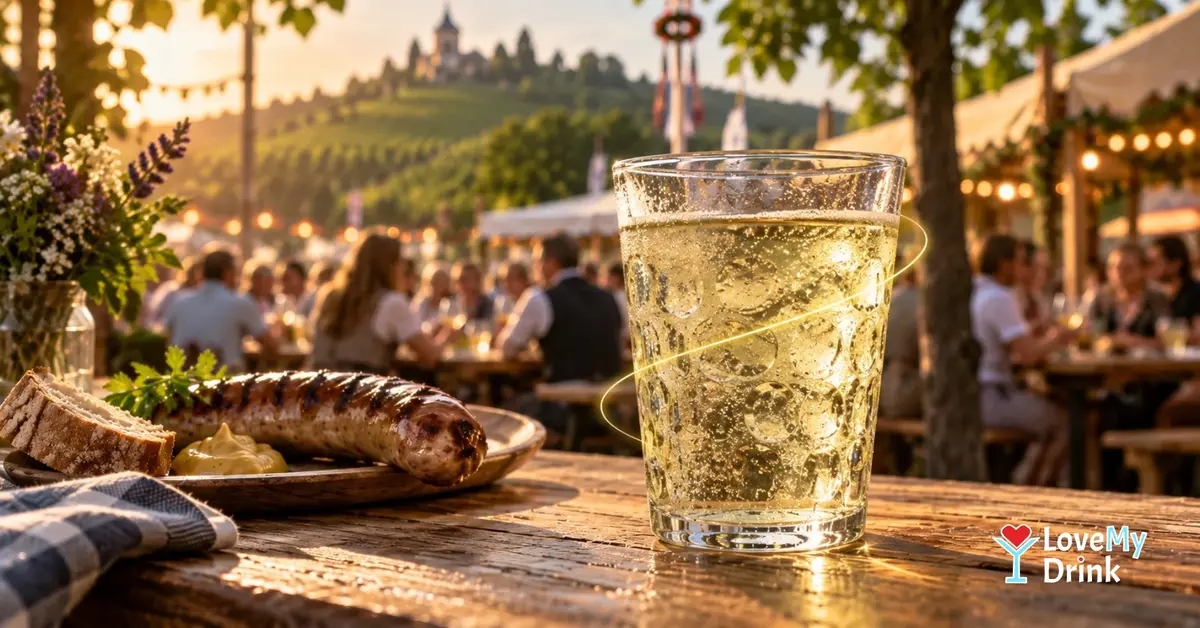
Why is a wine festival called a sausage market?
Let’s start with the obvious question. Wurstmarkt literally means “sausage market” — which sounds slightly confusing when the event is famous for wine.
The name makes more sense once you go back to the festival’s older life. According to the official Wurstmarkt history, the event was originally known as the Michaelismarkt. Over time it became a busy fair and social gathering, and the nickname Wurstmarkt caught on because so many sausages were eaten there. Written references from the early 19th century show both names being used, suggesting the sausage-market nickname was already well established.
So yes, the name really does come back to sausages. The funny part is that wine eventually became the bigger story.
It started with a pilgrimage, not a wine festival
The roots of the Wurstmarkt stretch back centuries. Vineyards around the Michelsberg were documented as early as 1155, and pilgrims later travelled to a chapel there for Saint Michael’s Day on 29 September.
A market grew around those gatherings. Historical evidence places the Michaelismarkt as far back as 1417, and by the middle of the 15th century the event had moved down to the Brühlwiesen — the area that became today’s Wurstmarktplatz.
What began around pilgrimage, trade and a church fair slowly turned into something much more social. Food arrived. Wine arrived. Crowds grew. The market became a folk festival, and the informal name Wurstmarkt stuck.
More than 600 years later, that odd little name is probably one of the best marketing accidents in wine history.
What is Dürkheimer Wurstmarkt like today?
Today, Bad Dürkheim describes the Wurstmarkt as the world’s largest wine festival. The modern event runs for nine festival days across two September weekends and combines local wine with fairground rides, food stalls, music, tents and long shared tables.
The scale is huge. The city’s historical overview lists more than 600,000 visitors, 36 traditional Schubkarchstände and roughly 300 wines and sparkling wines in a typical modern edition.
It is part wine tasting, part local tradition and part giant September party. That mix is exactly why it feels different from a formal wine fair.
What do people actually drink at Wurstmarkt?
Wine is the centre of the festival, despite the name. Local Bad Dürkheim wines and sparkling wines are poured across the grounds, but the experience changes depending on where you sit.
Rieslingschorle in a Dubbeglas
If you want the most instantly recognizable Wurstmarkt-style serve, start with a Rieslingschorle: Riesling mixed with sparkling mineral water. It is light, refreshing and very easy to drink at a long outdoor festival.
At the traditional Schubkarchstände, it is commonly served in a Dubbeglas — the distinctive dimpled glass closely associated with Palatinate wine culture. It is not delicate stemware. That is part of the charm.
Cold Riesling, bubbles, a dimpled glass and a crowded wooden table. Suddenly the whole festival makes sense.
Local wine and Sekt in the Weindorf
For a more wine-focused experience, the Weindorf offers Bad Dürkheim wines in stemmed glasses. This is where the festival feels less like a fairground and more like a very large open-air wine gathering.
Dry Riesling is an obvious place to begin, but local sparkling wine — Sekt — is also part of the line-up. You do not need to turn it into a tasting exam. Pick one style, taste it, then move on to something different if you are curious.
[image uuid="5e955b27-0a4d-4d24-9b7a-00e1a2f1e29b" alt="Rieslingschorle in a Dubbeglas beside local Riesling in a stemmed wine glass"][/image]What should you try first?
- For the most traditional casual experience: Rieslingschorle in a Dubbeglas.
- If you want the wine to lead: a dry local Riesling in the Weindorf.
- If you want bubbles: try a local Sekt.
- If you are skipping alcohol: look for one of the de-alcoholized wines, sparkling wines or Seccos listed for the current edition.
The Schubkarchstände might be the best part
The traditional Schubkarchstände are one of the details that make Wurstmarkt feel like Wurstmarkt rather than just another big festival.
The name comes from the old practice of winemakers bringing their wine to the grounds on wheelbarrows. According to the official festival history, the carts were turned over and used to support the wine barrels once they arrived.
[image uuid="ce84acb8-d50c-47b3-870d-ac8fa2116faa" alt="Traditional wooden wine stand and communal tables at a Palatinate wine festival"][/image]Today the stands are much more established, but the social idea survives: narrow wooden benches, narrow tables and people sitting close together over wine. It is wonderfully unpolished.
You could drink the same Riesling somewhere quieter. It would not be the same moment.
Bring a little Wurstmarkt feeling home
You do not need a fairground, 600,000 visitors or a German wine tent to borrow the best part of the idea. Keep it simple: a cold bottle of dry Riesling, chilled sparkling water for Schorle, something salty to eat and a table where everyone can pour their own glass.
Sausage is the obvious nod to the name, but bread, mustard, cheese and simple snacks work just as well. The point is not to recreate the festival perfectly. It is to make wine feel social rather than serious.
A few wine-night extras
This section contains affiliate links. Love My Drink may earn a commission from qualifying purchases at no extra cost to you.
If you want a few simple extras for an at-home wine night inspired by Wurstmarkt, here are four Amazon picks to browse:
- Browse wine-night extra 1 on Amazon
- Browse wine-night extra 2 on Amazon
- Browse wine-night extra 3 on Amazon
- Browse wine-night extra 4 on Amazon
And if the whole thing makes you want a shareable wine drink rather than a straight pour, our easy white sangria for a crowd is the relaxed at-home version of the same idea: cold wine, plenty to share and very little last-minute work.
Dürkheimer Wurstmarkt FAQ
Is Dürkheimer Wurstmarkt really a wine festival?
Yes. Despite the name, wine is the dominant drink. Bad Dürkheim officially describes Wurstmarkt as the world’s largest wine festival, with local wines and sparkling wines at the centre of the event.
Why is Wurstmarkt called a sausage market?
The older Michaelismarkt gradually became known as Wurstmarkt because of the large amount of sausage eaten at the fair. Historical records from the early 19th century show the two names being used together.
How old is the Wurstmarkt?
Evidence shows that the Michaelismarkt already existed in 1417, giving the festival a history of more than 600 years. Its roots are connected to pilgrimages and market activity around the Michelsberg.
What is a Dubbeglas?
A Dubbeglas is a traditional dimpled drinking glass associated with the Palatinate region. At Wurstmarkt, it is especially linked with the casual Rieslingschorle experience at the Schubkarchstände.
What is a Schubkarchstand?
It is one of the traditional wine-serving stands at Wurstmarkt. The name points back to the days when winemakers brought wine onto the festival grounds on wheelbarrows and used the carts as part of their serving setup.
When does Wurstmarkt usually happen?
The festival is held in September around the second and third Sundays of the month. Exact dates change each year, so check the official programme if you are planning a trip.
The name sounds wrong. That is why you remember it
Dürkheimer Wurstmarkt has almost everything you would expect from a huge wine festival: vineyards nearby, local producers, sparkling wine, Riesling and thousands of glasses being raised at once.
Then it gives the whole thing a name that sounds like a place to buy sausages.
Somehow, that makes it better. The Wurstmarkt is a reminder that wine culture does not always need to be polished or serious. Sometimes it is a cold Schorle, a crowded bench, something salty on the table and a story that has been getting stranger — and more fun — for six centuries.