Boulevardier Recipe: Bourbon vs Rye + 3:2:2 Ratio
Approx. 6 min read
Start with a whiskey-forward Boulevardier
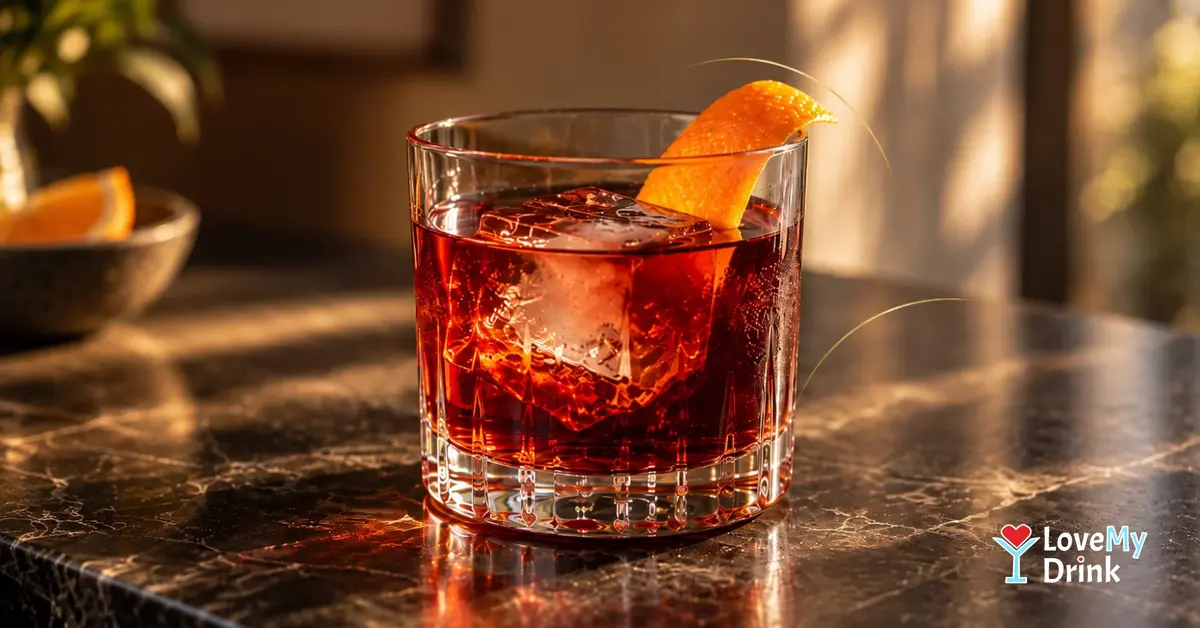
The Boulevardier is what happens when whiskey meets Campari and sweet vermouth: deep, bittersweet, warming and surprisingly easy to make at home. There is no citrus to squeeze and no shaker to clean. Measure, stir and pour.
Our starting point is a 3:2:2 ratio — 45 ml whiskey, 30 ml Campari and 30 ml sweet vermouth. It gives the whiskey enough room to lead without losing the bitter orange and herbal character that makes this drink so distinctive.
Easy Boulevardier recipe
Recipe details
- Difficulty: Easy
- Prep time: 3 minutes
- Tools: Mixing glass or sturdy glass, jigger, bar spoon or teaspoon, strainer
- Taste: Rich, bittersweet, warming and whiskey-forward
- Calories: Approx. 200 kcal, depending on the brands used
- Serves: 1 cocktail
- Best served: Over one large ice cube in a rocks glass, or strained into a chilled coupe
Ingredients
- 45 ml bourbon or rye whiskey (1.5 oz)
- 30 ml Campari (1 oz)
- 30 ml sweet red vermouth (1 oz)
- Plenty of fresh ice, for stirring
- 1 strip of orange peel, for garnish
How to make it
- Add the whiskey, Campari and sweet vermouth to a mixing glass or sturdy glass filled with fresh ice.
- Stir for about 20–30 seconds, until the drink is very cold and slightly diluted.
- Strain into a rocks glass over one large fresh ice cube. For an ice-free serve, strain into a chilled coupe instead.
- Express the orange peel over the drink, then add it as the garnish.
Love My Drink tip: Do not rush the stir. Proper chilling and a little dilution soften the bitter edge and help the whiskey, Campari and vermouth taste like one drink rather than three separate ingredients.
Why the 3:2:2 Boulevardier ratio works
Equal parts are easy to remember, but they can make Campari and sweet vermouth feel especially loud next to the whiskey. Moving to 3:2:2 gives bourbon or rye a little more space while keeping the drink unmistakably bittersweet.
Think of 45 ml whiskey, 30 ml Campari and 30 ml sweet vermouth as your dependable baseline. Make it once before changing anything. With only three ingredients, small adjustments are easy to taste.
What about a 1:1:1 Boulevardier?
You can absolutely make one. Equal parts create a softer whiskey presence and bring the bitter-orange and vermouth character further forward. If you already love a classic 1:1:1 Negroni, that version is worth trying too.
Bourbon vs rye: which makes the better Boulevardier?
Both work. They simply pull the cocktail in different directions.
- Bourbon: rounder, softer and usually a little sweeter in character. It makes the Boulevardier feel plush and approachable.
- Rye: drier, spicier and more assertive. It gives the drink a sharper edge and can stand up beautifully to Campari and vermouth.
If this is your first Boulevardier, bourbon is an easy place to start. If you already enjoy rye in a Manhattan, try the same bottle here and notice how the spice changes the finish.
If your Boulevardier tastes too bitter
Do not rewrite the recipe after the first sip. In a short three-ingredient cocktail, temperature, dilution and vermouth freshness can change the balance more than you might expect.
- Stir it long enough. Aim for about 20–30 seconds with plenty of cold ice. A warm, under-diluted Boulevardier tastes harsher.
- Check the vermouth. Sweet vermouth is wine-based, so keep an opened bottle refrigerated and tightly closed. Tired vermouth can make the whole drink feel flat.
- Try bourbon before changing the ratio. Its rounder profile can make Campari feel less aggressive than a spicy rye does.
- Then adjust one thing. If the drink is still too bitter for you, reduce Campari to 22.5 ml (0.75 oz) while leaving the other ingredients unchanged.
One deliberate change tells you much more than adding sweetness, changing the whiskey and cutting the Campari all at once.
Boulevardier vs Negroni: what is the difference?
The family resemblance is obvious: both drinks use Campari and sweet vermouth. The key difference is the base spirit. A Negroni uses gin; a Boulevardier uses bourbon or rye whiskey.
That one swap changes the mood of the drink. Gin keeps a Negroni botanical and bright. Whiskey makes the Boulevardier richer, warmer and more rounded. If you want to taste the contrast yourself, make our classic Negroni next and compare them side by side.
How to serve it and what you'll need
Serve the Boulevardier over one large cube in a rocks glass for a slower, softer sip, or strain it into a chilled coupe for a cleaner serve. Finish with orange peel either way.
- Mixing glass or sturdy glass
- Jigger
- Bar spoon or teaspoon
- Strainer
- Rocks glass or chilled coupe
- Fresh ice
- Peeler or small knife for the orange garnish
Boulevardier FAQ
What are the three ingredients in a Boulevardier?
A Boulevardier is made with bourbon or rye whiskey, Campari and sweet red vermouth. Orange peel is the classic finishing touch rather than part of the measured drink.
What is the best Boulevardier ratio to start with?
Start with 3:2:2: 45 ml whiskey (1.5 oz), 30 ml Campari (1 oz) and 30 ml sweet vermouth (1 oz). It keeps the drink recognisably bittersweet while giving the whiskey a little more presence than an equal-parts version.
Should I use bourbon or rye in a Boulevardier?
Use bourbon for a rounder, softer drink and rye for a drier, spicier one. Neither is automatically better. The useful test is to keep the same 3:2:2 ratio and change only the whiskey.
Should a Boulevardier be shaken or stirred?
Stir it with ice, then strain. There is no citrus juice, dairy or other ingredient that needs the aeration of shaking. Stirring chills and dilutes the drink while keeping the texture smooth.
Does sweet vermouth need to be refrigerated?
Yes. Once opened, keep sweet vermouth in the refrigerator and close the bottle properly. It is wine-based, and freshness matters in a cocktail with only three main ingredients.
Is a Boulevardier stronger than a Negroni?
It can taste richer and more spirit-forward because whiskey replaces gin and many Boulevardier recipes use a larger pour of the base spirit. The exact strength depends on the ratio and the alcohol content of the bottles you use.
Make it once, then make it yours
Start with 3:2:2, stir it properly cold, then adjust only one thing at a time. That is the beauty of a three-ingredient classic: small changes are easy to taste.
If whiskey-forward classics are your thing, try our beginner-friendly Old Fashioned next.