Manhattan Cocktail Recipe: 2:1 Ratio + Rye vs Bourbon
Approx. 8 min read
Manhattan ratio: why 2:1 is the best place to start
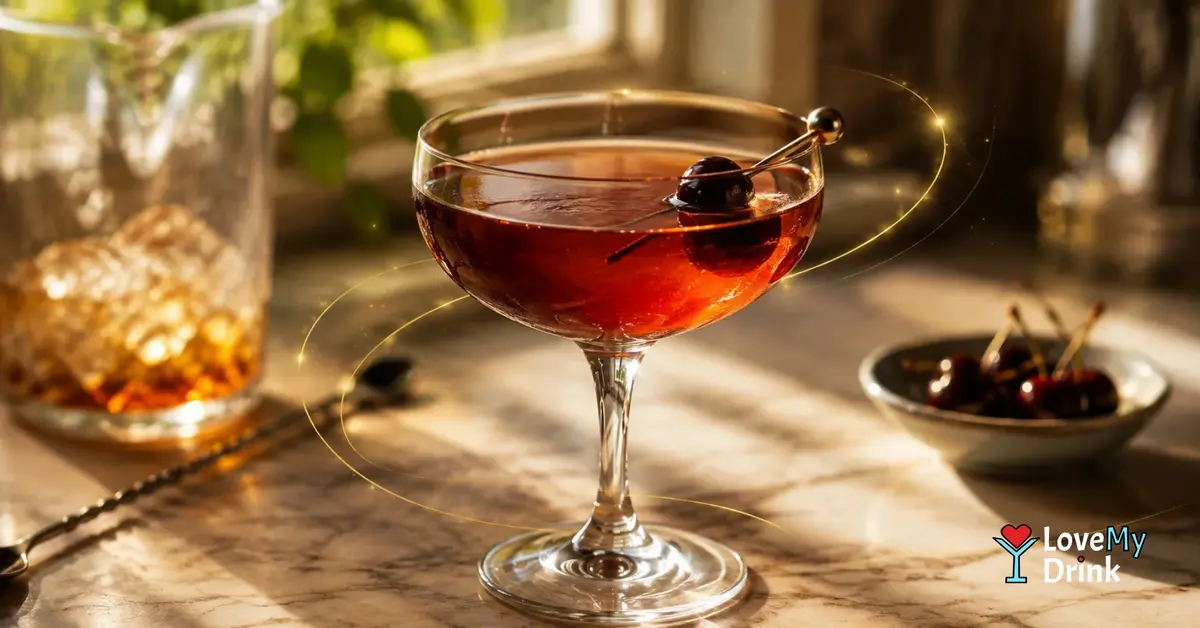
A classic Manhattan starts with 2 parts whiskey to 1 part sweet vermouth: 60 ml / 2 oz whiskey and 30 ml / 1 oz sweet vermouth, plus aromatic bitters. It is a strong baseline because you can clearly taste both the whiskey and the vermouth.
That does not mean 2:1 has to be your forever ratio. Make it once before you adjust anything. When you know what the baseline tastes like, every small change becomes useful instead of random.
Classic Manhattan cocktail recipe
Recipe details
- Difficulty: Easy
- Prep time: 3 minutes
- Tools: Mixing glass or sturdy glass, jigger, bar spoon or teaspoon, strainer
- Taste: Whiskey-forward, rich, aromatic and lightly sweet
- Calories: Approx. 180 kcal, depending on the whiskey and vermouth
- Serves: 1 cocktail
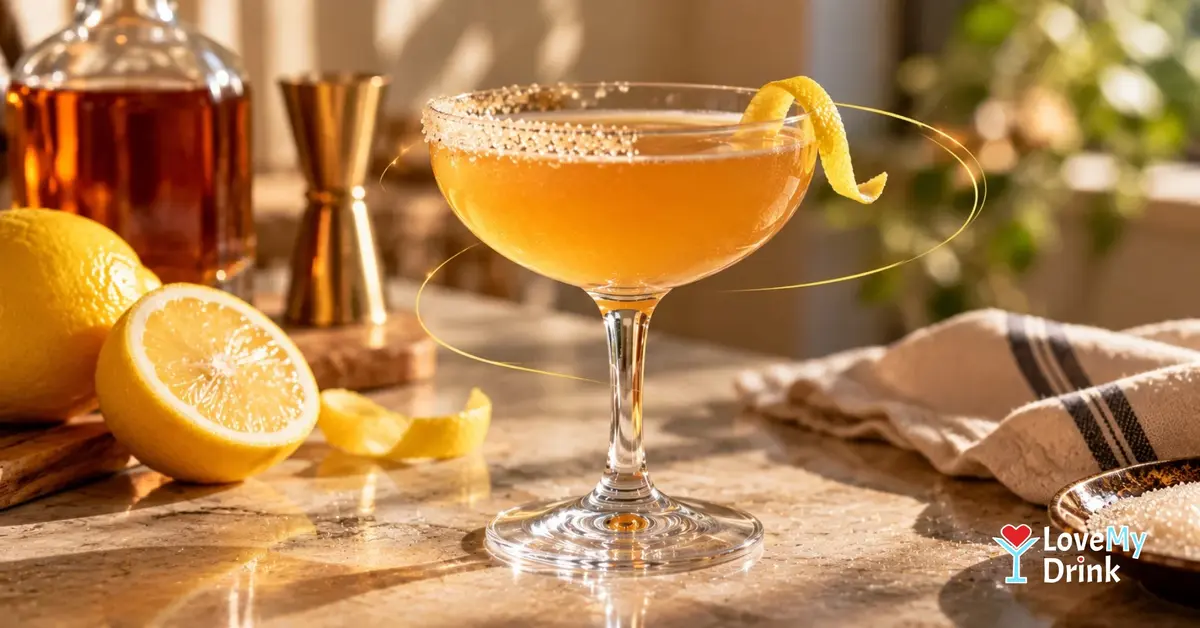
- Best served: In a chilled coupe or Nick & Nora glass, without ice
Ingredients
- 60 ml / 2 oz rye or bourbon whiskey
- 30 ml / 1 oz sweet vermouth
- 2 dashes aromatic bitters
- Plenty of fresh ice, for stirring
- 1 cocktail cherry or strip of orange peel, optional
How to make it
- Add the whiskey, sweet vermouth and bitters to a mixing glass or sturdy glass filled with fresh ice.
- Stir for about 20 to 30 seconds, until the drink is very cold and the sharp alcohol edge has softened.
- Strain into a chilled coupe or Nick & Nora glass.
- Garnish with a cocktail cherry or orange peel if you like, then serve straight away.
Love My Drink tip: Chill the serving glass while you stir. A Manhattan has no ice in the finished glass, so starting cold helps it stay crisp for longer.
The Manhattan Fix Order: diagnose before you change the ratio

If the first glass tastes wrong, do not immediately blame the 2:1 ratio. Work through these four checks in order. It is the easiest way to fix the actual problem instead of accidentally creating a second one.
1. Is it cold and diluted enough?
If the Manhattan tastes hot, sharp or disconnected, stir a little longer before changing the ingredients. Chilling and dilution soften the alcohol and help the whiskey, vermouth and bitters taste like one drink.
If it already tastes thin or watery, the opposite may be true. Use plenty of cold, solid ice and stop stirring once the drink is properly chilled.
2. Is the sweet vermouth fresh?
If the drink tastes dull, flat or oddly tired, check the vermouth before changing the ratio. Sweet vermouth is wine-based. Once opened, keep it refrigerated and close the bottle properly.
3. Is the whiskey style the real issue?
Rye usually makes the same recipe feel spicier, drier and more structured. Bourbon usually makes it feel rounder, softer and sweeter in character. If your Manhattan feels too plush or too sharp, changing the whiskey may solve it without touching the vermouth.
4. Now move the vermouth by 1/4 oz
Once temperature, freshness and whiskey style are working, adjust the vermouth in small steps. About 7.5 ml / 0.25 oz is enough to notice without losing the structure of the drink.
- More whiskey-forward: 60 ml / 2 oz whiskey + 22.5 ml / 0.75 oz sweet vermouth
- Classic starting point: 60 ml / 2 oz whiskey + 30 ml / 1 oz sweet vermouth
- Softer and more aromatic: 60 ml / 2 oz whiskey + 37.5 ml / 1.25 oz sweet vermouth
The rule: change one thing, taste again, then decide. That is much more useful than changing the whiskey, vermouth and stirring time all at once.
If a full Manhattan still feels more spirit-forward than you want tonight, our easy whiskey cocktails for beginners start with lighter, fizzier drinks and work up to stirred classics.
Rye vs bourbon: try the half-size Manhattan test

You do not need to make two full cocktails to find out which whiskey you prefer. If you already have rye and bourbon at home, make two half-size Manhattans with the same vermouth and bitters.
- Rye test: 30 ml / 1 oz rye + 15 ml / 0.5 oz sweet vermouth + 1 dash bitters
- Bourbon test: 30 ml / 1 oz bourbon + 15 ml / 0.5 oz sweet vermouth + 1 dash bitters
Stir them separately with similar ice for the same amount of time, then taste them side by side. The rye version should read spicier and firmer; the bourbon version should feel rounder and softer. Pick the direction you like before you start adjusting the ratio.
If you enjoy comparing how whiskey behaves in simple classics, our Old Fashioned recipe for beginners uses the same measure-first, adjust-second approach without vermouth.
Sweet vermouth, stirring and garnish: three details that matter
Keep opened sweet vermouth cold
Because vermouth is wine-based, it does not behave like a bottle of whiskey on the shelf. Refrigerate it after opening. In a three-ingredient cocktail, tired vermouth is difficult to hide.
Stir it instead of shaking it
A Manhattan is a stirred cocktail. Stirring chills and dilutes the whiskey, vermouth and bitters without the extra aeration created by shaking. Start around 20 to 30 seconds, then use temperature and taste as the real guide.
Cherry or orange peel?
A cocktail cherry gives the drink a richer, classic finish. An orange peel makes the aroma feel brighter and can be especially nice with bourbon. Neither is required, so use the garnish that suits the version in your glass.
Easy Manhattan variations to try next
Once the classic version feels familiar, these variations make sense because each changes one clear part of the original.
- Perfect Manhattan: keep 60 ml / 2 oz whiskey, but split the vermouth into 15 ml / 0.5 oz sweet and 15 ml / 0.5 oz dry vermouth.
- Dry Manhattan: replace the sweet vermouth with dry vermouth and finish with a lemon twist. Simply using less sweet vermouth does not turn a classic Manhattan into a Dry Manhattan.
- Black Manhattan: replace the sweet vermouth with Averna or another similar bittersweet amaro for a darker, more herbal direction.
- Rob Roy: use Scotch instead of rye or bourbon for a smoky or malty variation on the same basic structure.
What you actually need
You can make a Manhattan with a sturdy glass, a spoon, ice and any accurate way to measure. A dedicated mixing glass looks nice, but accurate pours matter more when you are trying to learn what a 7.5 ml / 0.25 oz adjustment actually changes.
Affiliate disclosure: This article contains an affiliate link. If you buy through it, Love My Drink may earn a commission at no extra cost to you. As an Amazon Associate, we earn from qualifying purchases.
If you want one useful bar tool for this recipe, this graduated jigger makes the 60 ml / 2 oz base pour and small 7.5 ml / 0.25 oz adjustments easier to repeat.
No jigger? Our guide to measuring cocktails without a jigger shows simple kitchen alternatives in both ml and oz.
Manhattan cocktail FAQ
What is the best whiskey-to-vermouth ratio for a Manhattan?
Start with 2 parts whiskey to 1 part sweet vermouth: 60 ml / 2 oz whiskey and 30 ml / 1 oz sweet vermouth, plus bitters. It is the most useful baseline because you can make small adjustments from there without guessing.
Is rye or bourbon better for a Manhattan?
Neither is automatically better. Rye usually makes the drink spicier and drier in character, while bourbon usually makes it rounder and softer. Use the same 2:1 ratio with both before deciding which style you prefer.
How much sweet vermouth goes in a Manhattan?
Use 30 ml / 1 oz sweet vermouth with 60 ml / 2 oz whiskey for the classic starting ratio. If you want to adjust it, change the vermouth by about 7.5 ml / 0.25 oz at a time.
Should a Manhattan be shaken or stirred?
Stir it with ice, then strain. The drink contains only whiskey, vermouth and bitters, so stirring gives you controlled chilling and dilution without unnecessary aeration.
Does sweet vermouth need to be refrigerated?
Yes. Once opened, keep sweet vermouth in the refrigerator and close the bottle properly. Fresh vermouth matters a lot in a simple drink where there are very few ingredients to hide a flat flavor.
Make one, then make it yours
Start with the 2:1 Manhattan tonight. If you love it, stop there. If you do not, follow the fix order before you start rewriting the recipe: cold enough, fresh vermouth, right whiskey, then a small ratio change.
Once you know which adjustment made the drink better, you can repeat it every time. That is the real goal: not the one perfect Manhattan, but the Manhattan you know how to make well. For more drinks worth learning this way, explore our classic cocktails every home bartender should know.