How Many Drinks Do You Need for a Party? A Guide for 10, 20, 30 or 50 Guests
Approx. 9 min read
The quick answer for a four-hour party
If you want one simple starting point, plan about 4 total drink servings per guest for a typical four-hour party. Use 3 for a relaxed dinner or afternoon gathering, and 5 for a livelier cocktail-style evening.
- Relaxed gathering: about 3 planned servings per guest
- Typical birthday, BBQ or house party: about 4 planned servings per guest
- Lively cocktail party or long evening: about 5 planned servings per guest
These are shopping estimates, not targets for how much anyone should drink. They include alcoholic and alcohol-free choices but exclude plain water. Strength and pour size vary, so one can, glass or cocktail does not always represent the same amount of alcohol. Use consistent pour sizes when converting your estimate into bottles and servings.
Adjust the estimate for party length
A shorter brunch and a long evening party should not use the same total. For a mixed menu of alcoholic and alcohol-free drinks, this is a practical starting range:
- 2 hours: 2–3 servings per guest
- 3 hours: 3–4 servings per guest
- 4 hours: 3–5 servings per guest
- 5 hours: 4–6 servings per guest
Choose the lower end for a meal-focused gathering. Use the middle for a typical party. Move toward the upper end when the event is longer, warmer, more active or built around cocktails. Whenever possible, keep a small part of the buffer unopened.
Count the guests who will actually drink alcohol
The most useful RSVP question is simple: alcoholic, alcohol-free or either? It makes the estimate more accurate and stops the alcohol-free part of the menu from becoming an afterthought.
If you do not know everyone’s preference, reserve roughly 25–30% of the planned servings for alcohol-free drinks. Increase that share for daytime parties, family gatherings, events with designated drivers or any group where several guests may not be drinking.
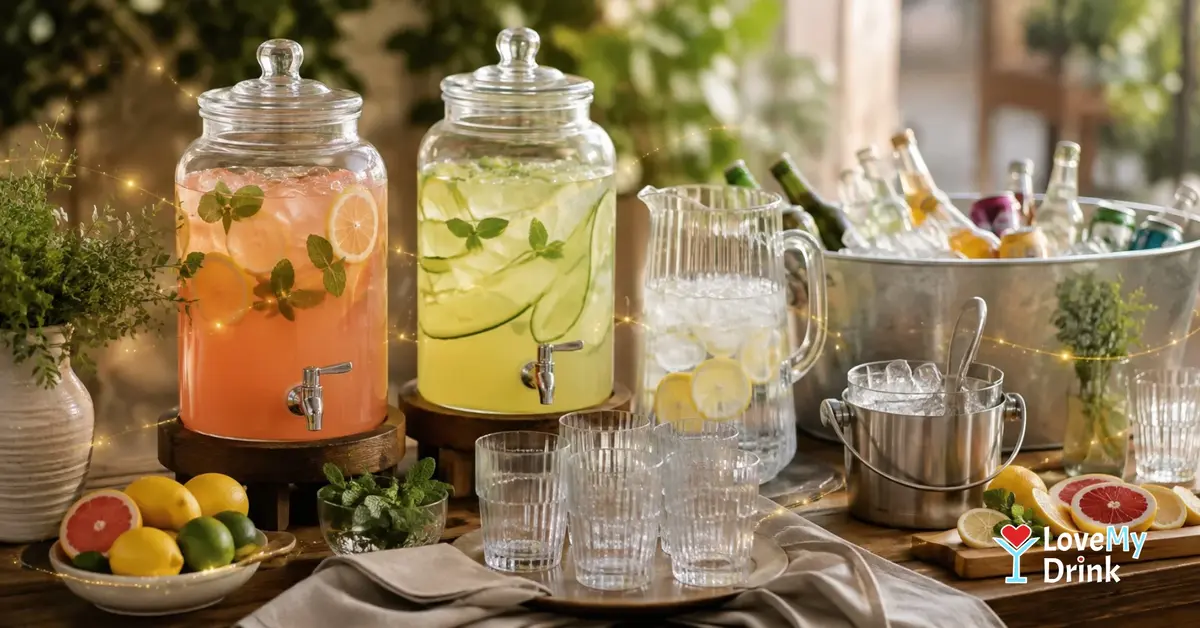
Make the alcohol-free choice feel like a proper drink. A chilled pitcher, fresh citrus, ice and a clear label are usually enough. Keep alcohol-free drinks easy to reach, and label alcoholic and alcohol-free options clearly so guests can choose without asking.
How many drinks do you need for 10, 20, 30 or 50 guests?
The examples below assume a four-hour party. Start with the typical number, then move down or up using the mood, length and guest preferences you already know.
For 10 guests
- Relaxed plan: 30 total drink servings
- Typical plan: 40 total drink servings
- Lively plan: 50 total drink servings
- Alcohol-free starting point for the typical plan: 10–12 servings
- Water: about 8–10 litres / 2.1–2.6 gallons
- Ice for drinks: about 5 kg / 11 lb, plus extra if you are chilling bottles and cans
For 20 guests
- Relaxed plan: 60 total drink servings
- Typical plan: 80 total drink servings
- Lively plan: 100 total drink servings
- Alcohol-free starting point for the typical plan: 20–24 servings
- Water: about 15–20 litres / 4–5.3 gallons
- Ice for drinks: about 9 kg / 20 lb, plus extra if you are chilling bottles and cans
For 30 guests
- Relaxed plan: 90 total drink servings
- Typical plan: 120 total drink servings
- Lively plan: 150 total drink servings
- Alcohol-free starting point for the typical plan: 30–36 servings
- Water: about 23–30 litres / 6.1–7.9 gallons
- Ice for drinks: about 14 kg / 31 lb, plus extra if you are chilling bottles and cans
For 50 guests
- Relaxed plan: 150 total drink servings
- Typical plan: 200 total drink servings
- Lively plan: 250 total drink servings
- Alcohol-free starting point for the typical plan: 50–60 servings
- Water: about 38–50 litres / 10–13.2 gallons
- Ice for drinks: about 23 kg / 50 lb, plus extra if you are chilling bottles and cans
You do not need to buy all of the water in small bottles. Chilled tap or filtered water in pitchers and dispensers is often easier, cheaper and less wasteful.
Once you know how many drinks to plan, the next thing to calculate is ice. Our party ice guide for 10–50 guests shows how much to buy for serving drinks, making cocktails, chilling bottles and keeping a reserve.
Turn servings into bottles, cans and pitchers
Once you have the total, decide how much of it belongs to each drink. Keep the menu short. Three clear choices are easier to shop for, chill and serve than a mini cocktail bar.
- Beer, hard seltzer or canned drinks: for shopping, count 1 can or bottle as 1 serving unit; larger or stronger products may contain more alcohol
- Still wine: a 750 ml bottle gives about 5 glasses at 150 ml / 5 oz each
- Sparkling wine: a 750 ml bottle gives about 6 smaller glasses at 125 ml / 4.2 oz each
- Spirits: a 750 ml bottle gives about 16 pours at 45 ml / 1.5 oz each
- Simple highballs: allow roughly 120–150 ml / 4–5 oz of mixer per serving
- Pitcher cocktails: use the stated recipe yield; many home-style party pitchers serve around 6
If sangria is your signature batch drink, our red sangria recipe for a crowd includes practical quantities for about 6, 10 or 20 guests, so you can turn the party estimate into an actual shopping plan.
Round up to complete bottles or packs. A modest unopened backup is more useful than several half-used ingredients nobody wanted.
The easiest three-drink party menu
You do not need eight cocktails. This setup covers different tastes without keeping you behind the bar all night:
- One signature batch cocktail. Choose something bright and easy to pour. These party cocktails you can make in a pitcher offer several crowd-friendly options.
- One open-and-serve option. Beer, wine, prosecco, hard seltzer or a simple spirit-and-mixer works well.
- One proper alcohol-free pitcher. Pick something colorful, cold and clearly labelled. Start with these non-alcoholic party drinks if you need ideas.
Still short on time? Our last-minute party drinks are made for exactly that kind of evening.
If your guest list is smaller, our 3-drink party menu for 8 guests gives you two vodka cocktails, one proper mocktail and an exact shared-ingredient shopping list built around one bottle.
How much water and ice should you plan?
For a four-hour indoor party, around 750 ml to 1 litre / 25–34 oz of water per guest is a comfortable planning range. Use more for hot weather, outdoor gatherings, active events or cocktail-heavy menus. Put water where guests can see it and reach it without asking.
For ice that goes into glasses, plan about 0.45 kg / 1 lb per guest. If the same party also needs ice to chill cans and bottles, add roughly another 0.25–0.45 kg / 0.5–1 lb per guest. Keep serving ice separate from cooling ice so it stays clean and easy to scoop.
Useful tools for easier party drink service
Affiliate disclosure: This section contains affiliate links. As an Amazon Associate I earn from qualifying purchases.
- Two matching drink dispensers (paid link) — use one for the alcoholic batch and one for the alcohol-free option, then label both clearly.
- A large cocktail pitcher (paid link) — useful when you want to prepare a signature cocktail before guests arrive.
- A beverage tub (paid link) — keeps cans, beer, wine and sparkling water cold without filling the fridge.
- An ice bucket with scoop (paid link) — keeps clean serving ice close to the drinks station.
You do not need every item. Choose the one that solves the biggest problem in your setup.
Common party drink planning mistakes
- Counting every adult as an alcohol drinker. Ask first or keep a generous alcohol-free share.
- Ignoring the event length. A two-hour brunch and a five-hour house party need different quantities.
- Offering too many choices. More options usually mean more open bottles, more shopping and more waste.
- Adding ice to batch drinks too early. Chill the base, then add bubbles and pour over fresh ice close to serving.
- Using the same ice for chilling and serving. Keep them separate.
- Hiding the water. Put it beside the main drinks station, not in another room.
- Treating alcohol-free drinks like an afterthought. Give them the same glassware, ice and garnish as everything else.
Your final party drinks shopping checklist
- Confirmed guest count
- Party length and event style
- Total servings using the relaxed, typical or lively estimate
- Alcohol-free share based on the guest list
- Beer, wine, spirits, mixers or batch ingredients converted into full bottles and packs
- Water: around 750 ml to 1 litre / 25–34 oz per guest for a four-hour indoor party
- Serving ice plus separate cooling ice if needed
- Citrus, herbs and one or two simple garnishes
- Clearly labelled alcoholic and alcohol-free drinks
- Food available throughout the event
- A safe plan for guests getting home
FAQ
How many drinks do I need for a four-hour party?
Use 4 total drink servings per guest as a simple middle estimate. Move down to 3 for a relaxed, meal-focused gathering or up to 5 for a livelier cocktail-style event. Include alcohol-free drinks in the total and plan water separately.
How much alcohol do I need for 20 guests?
For a typical four-hour party, start with 80 total drink servings. If around 25% are alcohol-free, that leaves about 60 alcoholic serving units. Adjust the split using your guests’ actual preferences.
How many bottles of wine do I need for 30 guests?
First decide how much of the menu will be wine. A 750 ml bottle gives about 5 glasses at 150 ml / 5 oz each. If you want 60 wine servings, plan about 12 bottles.
How many cocktails does one pitcher serve?
Many home party pitchers serve around 6, but the exact yield depends on the recipe, glass size and dilution. Use the recipe yield rather than guessing from the pitcher’s capacity.
Should I buy extra drinks?
A small buffer is sensible, especially when you can keep bottles and cans unopened. Add a modest backup pack instead of overbuying several different spirits and mixers.
What should I serve guests who do not drink alcohol?
Offer at least one proper alcohol-free drink with the same care as the cocktail: chilled glassware, plenty of ice, fresh citrus and a clear label. Water and plain soda should be available too, but they should not be the only options.
Final sip
Good planning is not about predicting every glass perfectly. Choose one clear menu, use a realistic range and make water and alcohol-free drinks easy to reach. Then step away from the drinks table and enjoy your own party too.
Affiliate disclosure: This article contains affiliate links. As an Amazon Associate I earn from qualifying purchases.