How Much Ice Do You Need for a Party? A Practical Guide for 10–50 Guests
Approx. 12 min read
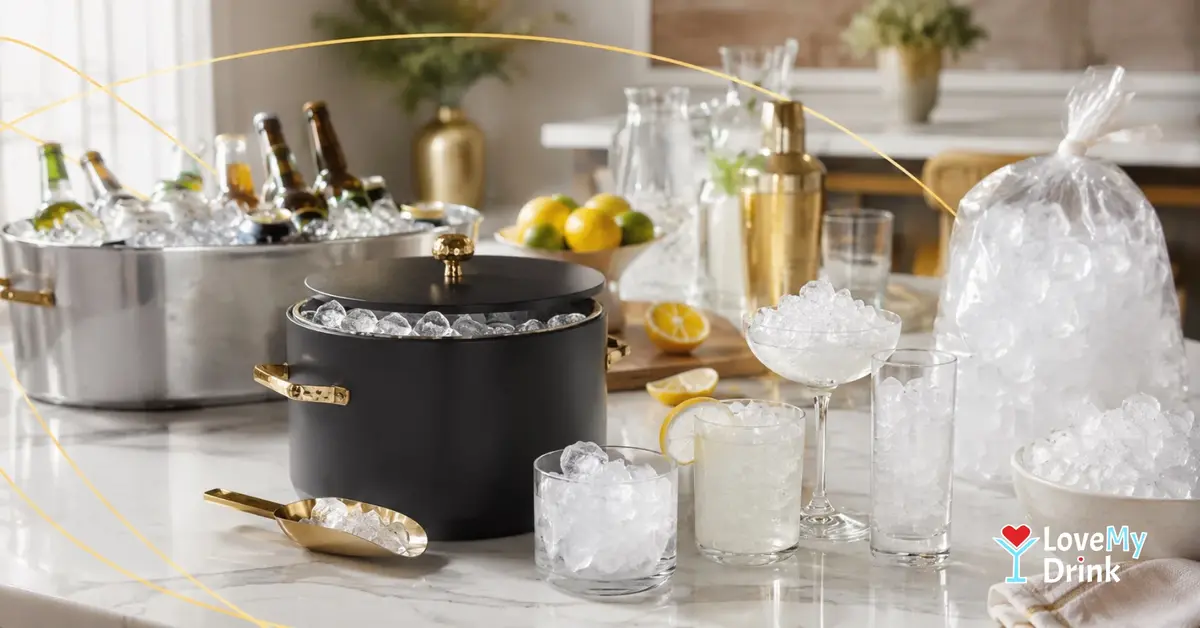
Ice is one of those party details that feels small until the first bag disappears. A few drinks, one cooler and a warm room can use far more than expected — especially when the same ice is doing four different jobs.
The easiest way to plan properly is to separate ice for serving, cocktail-making, chilling bottles and cans, and a reserve for melting or extra guests. Once you do that, the total becomes much easier to estimate.
Quick answer: how much ice should you buy for a party?
For a typical indoor party where ice is mainly going into drinks, start with about 1.5 lb / 0.7 kg per guest. Use around 2 lb / 0.9 kg per guest for a warm outdoor party, and around 2.5 lb / 1.1 kg per guest when you also need plenty of ice to chill bottles and cans.
These are planning amounts, not strict rules. Round up when the party is outdoors, lasts more than four hours, includes shaken cocktails or frozen drinks, or gives guests access to self-serve ice.
Ice for 10 guests
- Indoor drinks only: about 15 lb / 7 kg
- Warm or outdoor party: about 20 lb / 9 kg
- Drinks plus bottle and can chilling: about 25 lb / 11 kg
Ice for 20 guests
- Indoor drinks only: about 30 lb / 14 kg
- Warm or outdoor party: about 40 lb / 18 kg
- Drinks plus bottle and can chilling: about 50 lb / 23 kg
Ice for 30 guests
- Indoor drinks only: about 45 lb / 20 kg
- Warm or outdoor party: about 60 lb / 27 kg
- Drinks plus bottle and can chilling: about 75 lb / 34 kg
Ice for 50 guests
- Indoor drinks only: about 75 lb / 34 kg
- Warm or outdoor party: about 100 lb / 45 kg
- Drinks plus bottle and can chilling: about 125 lb / 57 kg
Love My Drink tip: If your event is both outdoors and using ice tubs for drinks, start with the highest number and add another 10–20% rather than trying to stretch the same melting ice across every job.
The four types of party ice you should plan separately
1. Serving ice
This is the clean ice that goes straight into glasses. It should stay separate from any ice used to chill bottles, cans or food. Serving ice is usually the largest part of your total when guests are drinking highballs, spritzes, sodas, mocktails or cocktails served on the rocks.
Keep it covered and easy to reach. An insulated ice bucket with a lid and scoop is useful for the ice that is actually going into drinks, especially when guests are serving themselves.
Do not ask guests to reach into a bag or use a drinking glass as a scoop. A proper scoop is faster, cleaner and less likely to disappear into the ice halfway through the night.
2. Mixing ice
Shaken and stirred cocktails use ice before the drink even reaches the serving glass. A Margarita may need one portion of ice in the shaker and a second fresh portion in the glass. That means cocktail-making can use noticeably more ice than beer, wine or simple poured drinks.
If you plan to shake cocktails one by one, add roughly one extra small scoop of ice for every drink you expect to make. For a large group, a batch drink is usually easier and more predictable. These party cocktails you can make in a pitcher are a good place to start.
3. Chilling ice
Ice used around bottles and cans melts faster because it is exposed to warm packaging, open air and frequent handling. Treat it as a separate quantity instead of assuming you can later move it into glasses.
For an outdoor setup, a large insulated cooler or beverage tub gives drinks and reserve bags a dedicated cold zone. Pre-chill the bottles and cans first, then use the ice to maintain the temperature rather than cool everything from room temperature.
That one step can save a surprising amount of ice. A container full of already-cold drinks needs maintenance; a container full of warm drinks needs a rescue mission.
4. Reserve ice
Reserve ice covers melting, unexpected guests, an extra round and the bag that gets opened too early. Keep around 15–25% of your total untouched until the first supply is running low.
A reserve only works when it is genuinely separate. Store it in a freezer or closed cooler instead of placing every bag beside the bar at the start of the party.
The most accurate method: weigh one glass of ice
Guest charts are useful, but your glasses and menu matter more than any universal rule. A tall highball packed with small cubes uses more ice than a short rocks glass with one large cube. The quickest way to improve your estimate is to test the exact glass you plan to use.
- Place an empty glass on a kitchen scale and reset it to zero.
- Fill the glass with the amount of ice you would normally serve.
- Write down the weight.
- Multiply that weight by the number of iced drinks you expect to serve.
- Add separate amounts for shaking or stirring, chilling bottles, and a 15–25% reserve.
Example: Your highball holds 4.5 oz / about 130 g of ice. You expect 20 guests to have two iced drinks each. That gives you about 11.25 lb / 5.2 kg of serving ice. Add around 8 lb / 3.6 kg for mixing and second rounds, then add a reserve. Your practical shopping target becomes about 25 lb / 11 kg.
This method is especially helpful when you are using unusually large glasses, crushed ice, small fast-melting cubes or a menu built around drinks served over a full glass of ice.
Not sure whether your drinks actually need regular cubes, one large cube or crushed ice? Our guide to the best ice for cocktails shows which style works best for different drinks.
How your drinks menu changes the amount of ice
Mostly beer, wine and canned drinks
You may need less serving ice but more chilling ice. Pre-chill everything in the refrigerator, then transfer only part of the drinks to the cooler and refill it in smaller batches. This reduces the amount of warm packaging touching the ice at once.
Highballs, spritzes and simple mixed drinks
These usually need a glass filled generously with ice. Use the standard indoor estimate as your minimum, then add more if guests will be serving themselves or refilling the same glass several times.
Shaken cocktails
Plan for two uses of ice: one batch for chilling and diluting the cocktail in the shaker, and fresh ice for drinks served on the rocks. Do not reuse soft shaker ice in serving glasses.
A simple home setup also becomes easier when the tools are ready before guests arrive. Our home bar essentials for beginners guide covers the basic tools without turning your kitchen into a professional bar.
Pitcher and batch cocktails
Mix the drink ahead and chill the ingredients in the refrigerator. Add ice to individual glasses rather than filling the pitcher with ice hours in advance. This keeps the batch from becoming watery and makes your ice use easier to control.
Frozen cocktails
Frozen drinks need ice as an ingredient, not just as a way to keep the glass cold. Calculate the recipe ice separately and do not take it from the serving or reserve allocation. If frozen Margaritas are the main event, buying an extra bag is safer than trying to make the last blender round with melting bar ice.
Indoor versus outdoor parties
Outdoor events use more ice because warm air, sun, hot tables and frequently opened coolers speed up melting. Shade matters almost as much as the container. Place the bar and coolers away from direct sunlight, keep lids closed and open one reserve bag at a time.
- Indoor, air-conditioned party: use the lower end of the range.
- Shaded patio in mild weather: add around 10%.
- Hot backyard party or BBQ: add around 25–35%.
- Long outdoor event with self-service drinks: plan from the highest range and keep a full reserve bag unopened.
Do not place ice directly on a dark outdoor table or beside a grill. Even a good container struggles when it is absorbing heat from below and from the sun at the same time.
Can you make enough ice at home?
For a small gathering, yes — especially when you start several days early. For 20 or more guests, normal freezer trays are better for supplementing purchased bags than replacing them completely.
Use stackable ice trays with lids when you want to build a clean reserve without the cubes absorbing freezer smells. Empty each frozen batch into sealed freezer bags, then refill the trays.
Label the bags as serving ice so they do not get used to chill bottles before the party. Homemade cubes are often best saved for the first round, while purchased ice handles high-volume refills and coolers.
How many bags of ice do you need?
Take your target weight, divide it by the size of the bags available in your store and always round up to the next whole bag.
- Need 30 lb and bags are 5 lb: buy 6 bags.
- Need 30 lb and bags are 10 lb: buy 3 bags.
- Need 40 lb and bags are 7 lb: buy 6 bags, giving you 42 lb.
- Need 75 lb and bags are 20 lb: buy 4 bags, giving you 80 lb.
Smaller bags are easier to open gradually and distribute between the bar and coolers. Larger bags may be cheaper and simpler to transport, but once opened they expose more ice to warm air. Choose the size that fits your storage plan, not only the lowest price per pound.
When should you buy the ice?
Buy bagged ice as close to the party as practical, ideally after the drinks are already chilled and the coolers are ready. If freezer space is limited, ask someone to collect the ice shortly before guests arrive rather than buying it the day before and trying to squeeze every bag around your food.
Set up in this order:
- Chill bottles, cans, mixers and batch cocktails in the refrigerator.
- Prepare the serving bucket, scoop and coolers.
- Place only the first bag of serving ice at the bar.
- Add chilling ice around already-cold bottles and cans.
- Keep the remaining bags closed as reserve.
Common party ice mistakes
- Counting only the ice in glasses: shaker ice and bottle-chilling ice can be a large part of the total.
- Using one open container for everything: serving ice should stay separate and covered.
- Trying to chill warm drinks with ice alone: refrigerate them first whenever possible.
- Adding ice to a batch too early: chill the mixture and add ice close to serving.
- Forgetting the reserve: the last unopened bag is often the one that saves the party.
- Underestimating outdoor heat: sun and open coolers can change the plan quickly.
FAQ about ice for a party
Is 1 lb of ice per person enough?
It can be enough for a short indoor gathering with mostly beer, wine or pre-chilled drinks. It is usually too little when guests are having multiple cocktails over ice, drinks are being shaken, or bottles and cans also need chilling.
How much ice do I need for 20 guests?
Plan around 30 lb / 14 kg for a typical indoor cocktail party. Increase that to about 40 lb / 18 kg for warm outdoor conditions or about 50 lb / 23 kg when a significant amount is also needed for chilling bottles and cans.
How much ice do I need for 50 guests?
A practical starting point is 75 lb / 34 kg for indoor drinks, 100 lb / 45 kg for a warm outdoor party, or 125 lb / 57 kg when ice is also doing substantial chilling work.
Should I put ice directly into a pitcher cocktail?
Not until close to serving. Chill the ingredients first and serve the drink over ice in individual glasses when possible. This prevents the pitcher from becoming diluted while it waits on the table.
Can I use cooler ice in drinks later?
No. Keep drinking ice separate from ice that has touched bottles, cans, hands, packaging or the inside of a cooler. Once ice has been used for chilling, treat it as chilling ice only.
Do large cubes reduce how much ice I need?
They melt more slowly in an individual drink, but they take up more freezer space and are slower to produce at home. They work well for a planned first round, but standard bagged ice is usually more practical for a large party.
The easiest party ice plan
Start with 1.5 lb / 0.7 kg per guest for a typical indoor party. Increase the amount for outdoor heat, shaken or frozen cocktails, self-service drinks and bottle chilling. Then divide the total into four clear zones: serving, mixing, chilling and reserve.
The goal is not to buy the biggest possible mountain of ice. It is to make sure the clean serving ice is still cold, covered and available when the party reaches its second round.
Disclosure: This article contains affiliate links. If you buy through one of these links, Love My Drink may earn a commission at no extra cost to you. As an Amazon Associate, we earn from qualifying purchases.