How to Make Simple Syrup for Cocktails: 1:1 vs 2:1, Method and Storage
Approx. 8 min read
Why cocktails use simple syrup instead of sugar
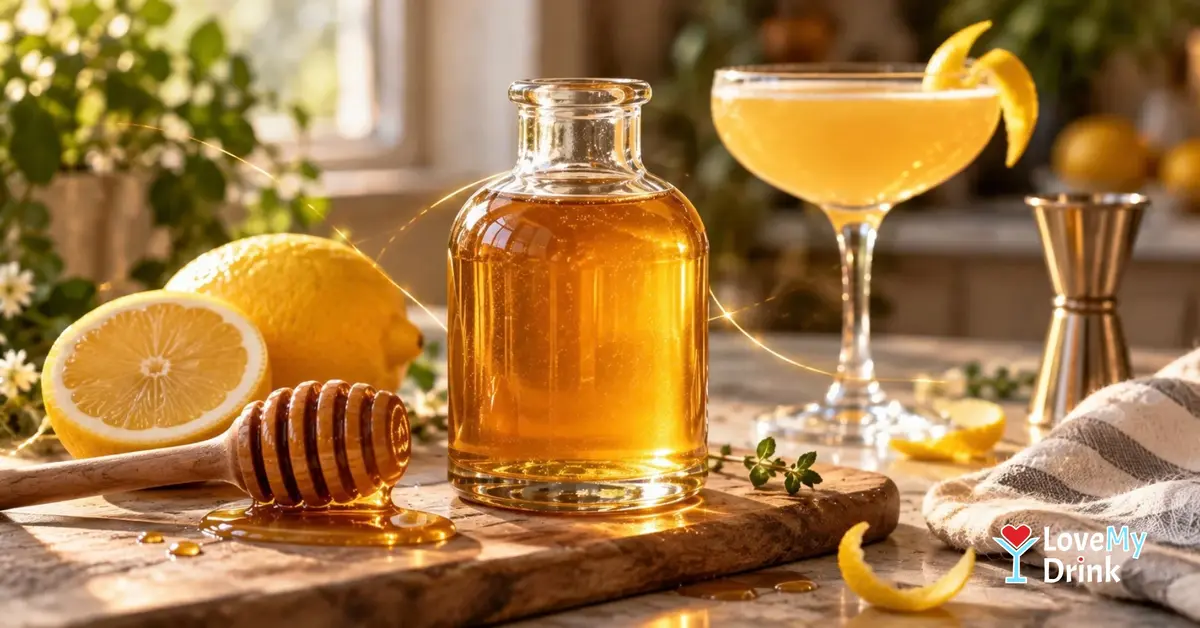
Cold drinks are not very good at dissolving granulated sugar quickly. Simple syrup solves that problem before the sugar reaches the glass, so sweetness spreads evenly through a Daiquiri, Mojito, Collins or sour instead of settling at the bottom.
It also makes sweetness easier to measure. A small change of 5 ml can noticeably change a short cocktail, which is why knowing whether your syrup is 1:1 or 2:1 matters.
Simple syrup ratio: what 1:1 and 2:1 actually mean
For consistency, the ratios in this guide are based on weight. A 1:1 syrup uses equal weights of sugar and water. A 2:1 rich syrup uses two parts sugar to one part water by weight. Because 100 ml of water weighs very close to 100 g, the kitchen math stays simple.
No scale? Equal volumes of sugar and water still make a perfectly useful home-bar syrup. Just know that it is not exactly the same concentration as a syrup measured by weight, so use one method consistently when you want repeatable drinks.
1:1 simple syrup
- Ratio: 1 part sugar to 1 part water by weight
- Texture: Light and easy to pour
- Best for: Daiquiris, Mojitos, Collins-style drinks, sours and everyday cocktail mixing
- Choose it when: A recipe simply says “simple syrup” or you want one flexible syrup for your home bar
2:1 rich simple syrup
- Ratio: 2 parts sugar to 1 part water by weight
- Texture: Thicker and more concentrated
- Best for: Spirit-forward drinks and recipes that specifically call for rich syrup
- Choose it when: You want more sweetness from a smaller amount of added liquid
The easy rule: If you are unsure which one to make, start with 1:1. It is the simplest all-purpose option and the easiest to adjust in a finished drink.
How to make 1:1 simple syrup
Ingredients
- 100 g / 3.5 oz granulated white sugar
- 100 ml / 3.4 fl oz water
Method
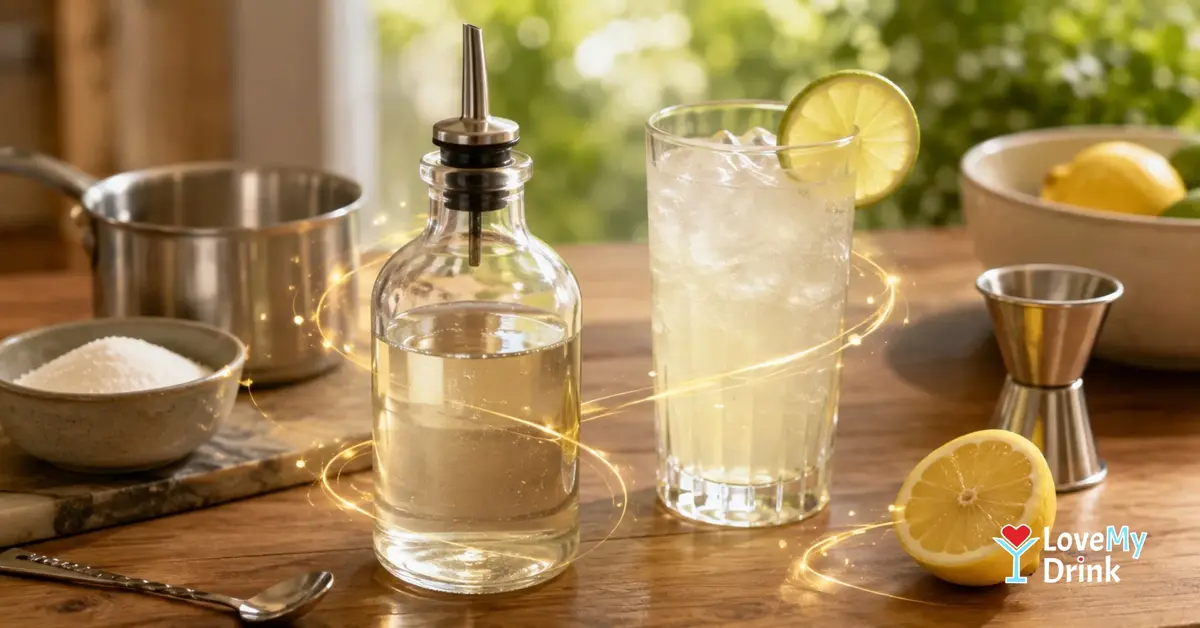
- Add the sugar and water to a small saucepan.
- Warm over low heat, stirring gently, until the sugar has completely dissolved and the syrup looks clear.
- Remove it from the heat as soon as the sugar has dissolved. Do not keep boiling and reducing it.
- Let the syrup cool completely.
- Transfer it to a clean, airtight bottle or jar and refrigerate.
Quick tip: The goal is to dissolve the sugar, not cook it. Long boiling changes the water-to-sugar balance and can leave you with a more concentrated syrup than the recipe expects.
Can you make simple syrup without heat?
Yes. For a 1:1 syrup, combine sugar and room-temperature water in a clean jar, close it and shake well. Let it sit, shake again and repeat until the sugar has dissolved. A rich 2:1 syrup can also dissolve without cooking, but it takes more time and effort, so gentle heat is usually the easier home method.
Make a small batch you will actually use
Simple syrup takes only a few minutes to make, so a giant bottle is rarely necessary. A smaller batch is easier to keep fresh and much less likely to disappear into the back of the fridge.
Useful 1:1 batch sizes
- Tiny batch: 50 g / 1.8 oz sugar + 50 ml / 1.7 fl oz water — enough for a few cocktails
- Regular home batch: 100 g / 3.5 oz sugar + 100 ml / 3.4 fl oz water — the easiest everyday size
- Party batch: 250 g / 8.8 oz sugar + 250 ml / 8.5 fl oz water — useful when you are mixing several drinks
For a 2:1 rich syrup, keep the water amount the same and double the sugar. For example, use 200 g / 7 oz sugar with 100 ml / 3.4 fl oz water.
How to substitute 1:1 and 2:1 simple syrup
Do not swap the same volume of 1:1 and 2:1 syrup. Rich syrup contains more sugar in the same amount of liquid, so a one-for-one replacement can push a balanced cocktail too sweet.
- Replacing 1:1 with 2:1: Start with about two-thirds as much rich syrup. If the recipe uses 15 ml / 0.5 oz of 1:1 syrup, start around 10 ml / 0.35 oz of 2:1.
- Replacing 2:1 with 1:1: Start with about one-and-a-half times as much standard syrup. If the recipe uses 10 ml / 0.35 oz of 2:1 syrup, start around 15 ml / 0.5 oz of 1:1.
Treat those numbers as starting points, not laws. Citrus changes from fruit to fruit, spirits vary and your preferred sweetness matters. Make one small adjustment, mix again and taste before adding more.
If a finished drink is already too sweet, sour, strong or thin, use our cocktail rescue guide before adding another large splash of anything.
How long does simple syrup last?
Keep homemade simple syrup refrigerated in a clean, airtight bottle or jar. For a standard 1:1 syrup, around one month is a sensible home-bar guideline when it has been prepared and handled cleanly. Rich 2:1 syrup often keeps longer, but concentration, preparation and handling all affect shelf life.
- Cool the syrup before sealing and refrigerating it.
- Use a clean bottle or jar.
- Pour from the bottle instead of dipping used spoons into it.
- Label the container with the date if you do not make cocktails often.
- Discard it if you see mold, unexpected cloudiness or fizzing, or notice an off smell.
If you will not use the syrup soon, freezing it in a freezer-safe container or small portions is another option. For most home bars, though, the easiest solution is still the smallest one: make less syrup more often.
Simple syrup is only one part of the fridge puzzle. If you also have opened vermouth, fresh citrus, tonic or half-used mixers waiting around, our cocktail ingredient storage guide shows what belongs in the fridge, what can stay on the bar cart and when quality starts to drop.
Cocktails that show why the ratio matters
Simple syrup is rarely there to make a cocktail taste obviously sugary. Its job is usually to soften acidity and help the drink feel balanced. These recipes make that easy to see.
- Classic Daiquiri — rum, fresh lime and 1:1 simple syrup make the sweet-sour balance easy to taste.
- Easy Mojito — syrup blends quickly with lime, mint and rum without leaving sugar crystals in the glass.
- Tom Collins — a measured amount of syrup softens lemon before soda water lengthens the drink.
- Party cocktails in a pitcher — measured syrup makes it easier to control sweetness across several servings.
Common simple syrup mistakes
- Not defining the ratio: A 1:1 syrup and a 2:1 syrup are not interchangeable, and weight-based and volume-based ratios are not identical either.
- Boiling for too long: Extra evaporation makes the syrup more concentrated than planned.
- Using rich syrup one-for-one: The drink can become much sweeter than the original recipe intended.
- Making far too much: Small batches are easy to remake and easier to keep fresh.
- Guessing the pour: A few extra milliliters can noticeably change a short sour-style cocktail.
Simple syrup FAQ
What sugar is best for simple syrup?
Granulated white sugar is the easiest choice when you want a neutral syrup that will not change the flavor or color of the cocktail. Brown or raw sugar also works, but it brings deeper caramel and molasses-like notes.
Can I make simple syrup without heat?
Yes. A 1:1 syrup can be made by shaking sugar and room-temperature water until the sugar dissolves. Heat is faster, especially for a more concentrated 2:1 rich syrup.
Can I use 2:1 syrup instead of 1:1 syrup?
Yes, but reduce the amount. A practical starting point is about two-thirds as much 2:1 syrup as the 1:1 quantity in the recipe, then taste and adjust.
Why did my simple syrup crystallize?
Crystallization is more likely when the syrup is very concentrated, some water has evaporated or sugar crystals remain around the sides of the container. Gentle heating with a small amount of water can dissolve the crystals again if the syrup otherwise looks and smells fresh.
Can you freeze simple syrup?
Yes. Freezing is useful when you have more syrup than you will use soon. Store it in a freezer-safe container or small portions, then thaw what you need in the refrigerator.
Final sip
For most cocktails, 1:1 simple syrup is the easiest place to start. Make a small batch, measure it properly and keep 2:1 rich syrup for recipes that need more concentrated sweetness.
Two ingredients. One ratio worth remembering. A lot fewer cocktails ruined by a random extra pour.