7 Low-ABV Cocktails for Slow, Easy Evenings
Approx. 9 min read
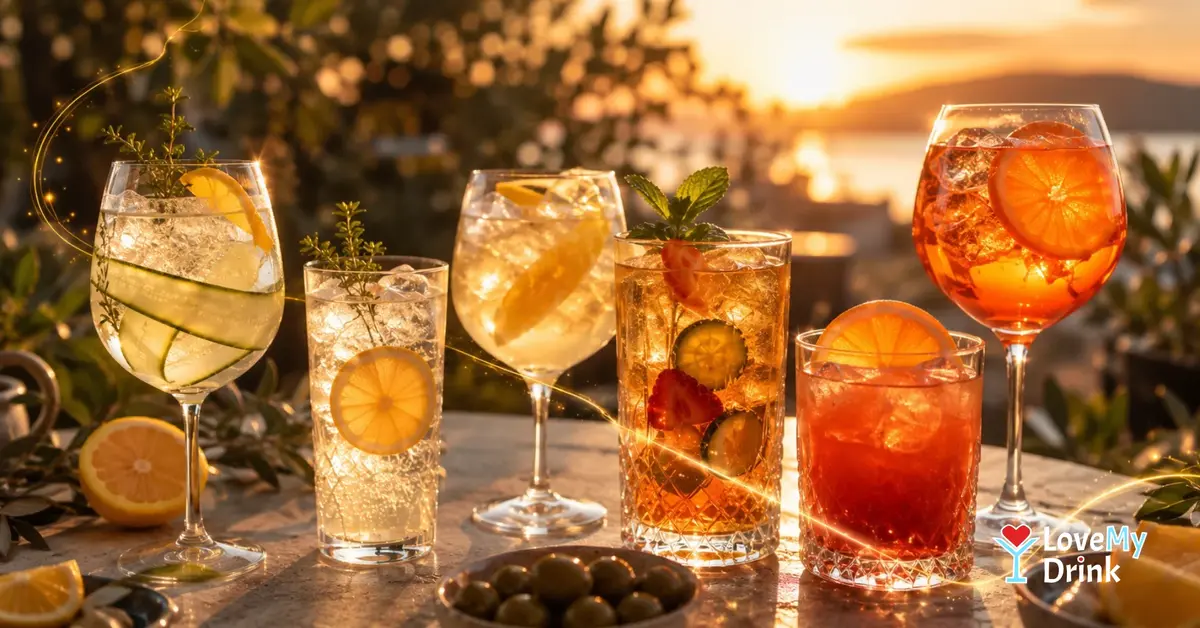
A lighter cocktail should still feel like a cocktail. These seven keep the bitterness, herbs, citrus, fruit and bubbles that make a drink feel complete — just with a gentler base than a typical spirit-forward pour.
Instead of sorting them by spirit, we are sorting them by strength. Start around 5% ABV with sherry or vermouth and tonic, then move up through fruitier aperitif drinks to an Aperol Spritz at about 9%.
Pick your pour: from about 5% to 9% ABV
There is no single universal cutoff for a low-ABV cocktail. For this guide, Love My Drink uses a practical working range of about 10% ABV or below before meaningful dilution from melting ice.
- Fino Sherry & Tonic — approx. 5% ABV: dry, crisp and slightly saline
- Vermouth & Tonic — approx. 5.3% ABV: herbal, bright and very easy
- Lillet & Tonic — approx. 5.7% ABV: soft citrus, floral and polished
- Pimm's Cup — approx. 6.3% ABV: fruity, herbal and relaxed
- Garibaldi — approx. 6.8% ABV: bittersweet orange with a juicy finish
- Long Americano — approx. 8.2% ABV: bitter, complex and aperitivo-style
- Aperol Spritz — approx. 9.2% ABV: sparkling, orange-led and familiar
Those numbers are estimates, not laboratory measurements. They use common bottle strengths: 15% fino sherry, 16% vermouth, 17% Lillet Blanc, 25% Pimm's No. 1, 25% Campari, 11% Aperol and 11% Prosecco. Check your own labels because the same product category can vary by producer and market.
Low-ABV still means alcoholic. A lower percentage changes the strength of the drink. It does not make it alcohol-free.
7 low-ABV cocktails for slow, easy evenings
1. Fino Sherry & Tonic — approx. 5% ABV
Dry, cold and quietly savory, this is the lightest drink in the lineup. Fino already brings nuttiness and salinity, so tonic can lengthen it without making the glass taste empty.
Ingredients
- 60 ml / 2 oz fino sherry
- 120 ml / 4 oz chilled tonic water
- Ice
- Lemon peel or lemon wheel, optional
How to make it
- Fill a highball or wine glass with ice.
- Pour in the fino sherry.
- Top with tonic water and stir once or twice.
- Finish with lemon if you want a brighter aroma.
Luca's tip: Keep both the sherry and tonic properly cold. This drink is deliberately subtle, so warm ingredients make it feel flat very quickly.
2. Vermouth & Tonic — approx. 5.3% ABV
This is one of the easiest ways to turn a bottle of vermouth into a proper long drink. Dry vermouth gives a sharper herbal profile; bianco vermouth makes the same build softer and rounder.
Ingredients
- 60 ml / 2 oz dry or bianco vermouth
- 120 ml / 4 oz chilled tonic water
- Ice
- Orange or lemon slice
How to make it
- Fill a large glass with ice.
- Add the vermouth.
- Top with tonic and stir gently.
- Add citrus and serve immediately.
Luca's tip: Vermouth is wine-based, so treat an opened bottle like wine. Keep it refrigerated rather than leaving it on the bar for weeks.
3. Lillet & Tonic — approx. 5.7% ABV
Lillet Blanc makes this version softer and more citrus-led than a dry vermouth tonic. It feels polished, but the method is still just pour, top and stir.
Ingredients
- 60 ml / 2 oz Lillet Blanc
- 120 ml / 4 oz chilled tonic water
- Ice
- Orange wheel, grapefruit slice or cucumber ribbon
How to make it
- Fill a wine glass generously with ice.
- Pour in the Lillet Blanc.
- Top with tonic water.
- Stir gently and add your garnish.
Luca's tip: Use a clean, not-too-sweet tonic. The goal is to keep the citrus and floral character clear, not bury it under sugar.
4. Pimm's Cup — approx. 6.3% ABV
Fruity, herbal and easy to build, a Pimm's Cup brings much more aroma than its strength suggests. This version keeps the garnish simple so the drink still feels easy enough for one glass at home.
Ingredients
- 50 ml / 1.7 oz Pimm's No. 1
- 150 ml / 5 oz chilled lemon-lime soda or non-alcoholic sparkling lemonade
- Ice
- A few slices of cucumber and strawberry, optional
- Mint sprig, optional
How to make it
- Fill a tall glass with ice.
- Add the Pimm's.
- Top with the chilled soda or sparkling lemonade.
- Add a little fruit or mint if you have it, then stir gently.
Luca's tip: Do not turn the garnish into a fruit salad. A few fresh pieces give aroma and color without making the drink awkward to sip.
5. Garibaldi — approx. 6.8% ABV
Campari and orange juice sound simple because they are simple. The contrast is what makes the drink work: bitter orange from the aperitivo against fresh, sweet-tart citrus.
Ingredients
- 45 ml / 1.5 oz Campari
- 120 ml / 4 oz fresh orange juice
- Ice
- Orange wedge, optional
How to make it
- Fill a highball glass with ice.
- Pour in the Campari.
- Top with fresh orange juice.
- Stir gently and finish with orange if you like.
Luca's tip: If you can, aerate the orange juice for a few seconds with a handheld frother or shake it hard in a sealed jar before pouring. The softer texture makes this very simple drink feel noticeably better.
6. Long Americano — approx. 8.2% ABV

This is a deliberately longer Americano build: equal parts Campari and sweet vermouth, stretched with a more generous pour of soda. You keep the bitter-herbal structure while bringing the finished strength down.
Ingredients
- 30 ml / 1 oz Campari
- 30 ml / 1 oz sweet vermouth
- 90 ml / 3 oz chilled soda water
- Ice
- Orange slice or peel
How to make it
- Fill a rocks glass or highball with ice.
- Add the Campari and sweet vermouth.
- Top with soda water.
- Stir gently and finish with orange.
Luca's tip: Balance is key here. Start with the 1:1:3 build before adjusting. Less soda makes the drink denser and stronger; much more can flatten the vermouth and bitterness.
7. Aperol Spritz — approx. 9.2% ABV
The most familiar glass is also the strongest one on this ladder. The classic 3-2-1 build keeps the orange bitterness clear while Prosecco and soda give the drink its lift.
Ingredients
- 90 ml / 3 oz chilled Prosecco
- 60 ml / 2 oz Aperol
- 30 ml / 1 oz soda water
- Ice
- Orange slice
How to make it
- Fill a large wine glass generously with ice.
- Pour in the chilled Prosecco.
- Add Aperol and soda water.
- Stir once or twice and finish with an orange slice.
Luca's tip: Keep the bubbles cold and do not over-stir. If you want the complete classic ratio guide, our easy Aperol Spritz recipe explains why the 3-2-1 build works.
How to estimate cocktail ABV without overcomplicating it
The basic idea is simple: work out how much pure alcohol comes from each alcoholic ingredient, add those amounts together, then divide by the total liquid volume before ice dilution.
For the Long Americano above, 30 ml of Campari at 25% contributes 7.5 ml of pure alcohol, while 30 ml of sweet vermouth at 16% contributes 4.8 ml. That is 12.3 ml of alcohol in 150 ml of liquid, or about 8.2% ABV before ice dilution.
Change the bottle strength or the ratio and the estimate changes too. Melting ice will usually lower the percentage further as the drink sits.
Why a lighter cocktail can still taste complete
The trick is not simply adding more mixer. It is choosing ingredients that already bring structure, then using dilution deliberately.
- Start with flavor-rich lower-proof bases: sherry, vermouth and aperitifs bring herbs, bitterness, fruit and acidity without relying on a full-strength spirit pour.
- Use bitterness or acidity for contrast: tonic, citrus and bitter aperitifs stop a lighter drink from tasting like sweet soda.
- Keep everything very cold: cold ingredients keep simple highballs crisp and make sweetness feel more controlled.
- Measure the ratio: lower-ABV does not mean random. A free-pour can make the drink sweeter, flatter or stronger than the version you intended.
If you want to lighten one of these builds a little more, start with another 15–30 ml / 0.5–1 oz of soda or tonic. Make one change, taste it cold, then decide whether it still feels balanced.
Low-ABV is not the same as alcohol-free
Every drink in this list contains alcohol. If you want a true zero-proof option, use a recipe designed to be alcohol-free from the start rather than treating a small alcoholic pour as “close enough.”
For the same bubbly, aperitivo-style feeling without the alcoholic base, try our seven non-alcoholic spritz recipes. They use bitterness, citrus, herbs and bubbles to keep the drinks feeling intentional without a traditional spirit pour.
Low-ABV cocktail FAQ
What is considered a low-ABV cocktail?
There is no universal cocktail cutoff. For this article, we use about 10% ABV or below in the finished liquid before meaningful ice dilution. Other bars, writers and brands may use a different range.
What is the lowest-ABV cocktail on this list?
The Fino Sherry & Tonic is the lightest at roughly 5% ABV using 60 ml of 15% fino and 120 ml tonic water. The exact number depends on the sherry you buy.
Can I make these cocktails even lighter?
Yes. The easiest adjustment is usually a little more soda or tonic rather than changing every ingredient. You can also reduce the alcoholic base slightly, but taste as you go so the drink still has enough structure.
Are low-ABV cocktails alcohol-free?
No. Low-ABV cocktails still contain alcohol. If you need a zero-proof drink, choose a recipe specifically built with non-alcoholic ingredients and check product labels when strict 0.0% matters.
Is a French 75 a low-ABV cocktail?
Not by the working definition used in this article. A French 75 combines a full-strength base spirit with sparkling wine, so it sits noticeably above these lower-proof builds. If you want to compare the structure, see our French 75 recipe.
Pick the flavor first, then check the number
The best low-ABV cocktail is not automatically the weakest one. It is the glass that still gives you enough bitterness, citrus, herbs, bubbles or fruit to feel finished.
Start around 5% with sherry or vermouth and tonic, move toward the bittersweet Long Americano, or choose the familiar Aperol Spritz near the top of the ladder. Measure the pour, keep everything cold and let flavor do more of the work.