Aquavit for Beginners: What It Tastes Like & 3 Easy Ways to Drink It
Approx. 9 min read
Aquavit in 30 seconds
Aquavit, also written akvavit, is a botanical spirit closely associated with the Nordic countries, built around caraway, dill seed or both. Under EU rules, those botanicals must account for much of the drink’s character, and aquavit must be at least 37.5% ABV.
- Defining flavors: caraway, dill seed or both
- Strength: at least 37.5% ABV under EU rules
- Common styles: clear and botanical, or barrel-aged and rounder
- Beginner move: taste one small pour before you decide how to mix it
The easiest comparison is gin. Gin is led by juniper. Aquavit shifts the botanical center toward caraway and dill, which can make it taste earthier, greener and more savory. That difference is the whole point.
What does aquavit taste like? Use four flavor anchors
Do not start with a giant tasting wheel. Start with four broad directions and see which one your bottle gives you first.
1. Caraway: earthy, spicy and rye-bread-like
Caraway is often the easiest note to recognize. It can feel earthy, peppery and savory, with the familiar aromatic character you may know from rye bread. In some bottles it is bold. In others it sits quietly behind citrus or other spices.
2. Dill and herbs: fresh, green and savory
Dill-led aquavit can feel greener and fresher. Think herbs rather than sweetness. If you already like botanical gin, this is often the easiest bridge into aquavit.
3. Citrus and spice: brighter and easier to mix
Many aquavits use extra botanicals around the defining caraway or dill character. Citrus peel, fennel, coriander, anise and warming spices can make a bottle feel brighter, softer or more aromatic.
4. Oak: rounder, warmer and more whisky-like
Barrel-aged aquavit can add vanilla, toasted spice, wood and a softer finish. It is still aquavit, but oak can move the experience away from a crisp botanical shot and closer to a slow sipping spirit.
Find your aquavit style
- Love crisp gin? Look for a clear, herbal or citrus-forward aquavit.
- Like savory flavors? A caraway-forward bottle will show aquavit at its most distinctive.
- Prefer whisky? Start with a barrel-aged expression and try it less cold.
- Not sure yet? Start with the bottle you have and use the flavor profile above to decide whether to sip it, chill it or mix it long.
Aquavit vs gin vs vodka: the easiest comparison
- Vodka: the neutral reference point. Its job is usually to stay clean and get out of the way.
- Gin: a botanical spirit defined by juniper, often with citrus, herbs and spice around it.
- Aquavit: a botanical spirit where caraway, dill seed or both provide much of the defining character.
So no, aquavit is not simply flavored vodka, and it is not Nordic gin. But if gin is already familiar, the comparison is useful because both spirits let botanicals lead the glass.
If that sounds like your comfort zone, start with our classic Gin and Tonic. It gives you a familiar highball to compare with the aquavit version below.
Clear vs barrel-aged aquavit: the beginner shortcut
Clear or lightly colored aquavit
This is usually the simplest starting point if you want a bright, botanical drink. Caraway, dill, citrus and spice stay easy to notice, especially in a cold highball with bubbles.
Try it chilled if that makes the first sip feel friendlier, but do not freeze every bottle into silence. Very cold spirits can hide aroma as well as alcohol heat.
Barrel-aged aquavit
Oak can make aquavit feel rounder and warmer, with notes such as vanilla, baking spice and wood. These bottles often reward slower sipping and do not need to be ice-cold.
If you already enjoy bourbon or other barrel-aged spirits, this is probably your easiest entry point. Our Bourbon for Beginners guide uses the same idea: taste the bottle in a simple way first, then change one variable at a time.
One useful rule: read the bottle description instead of judging only by color. Aquavit styles vary, and color alone does not tell you everything about age or flavor.
3 easy ways to drink aquavit
Now put that flavor profile to work. These three serves make it easy to see what changes when you add temperature, dilution and a familiar mixer.
1. Start with a small neat taste
- 15–20 ml aquavit (0.5–0.7 oz)
- A small tasting glass, wine glass or rocks glass
- Pour a small amount.
- Smell gently before you sip. Do not push your nose deep into the glass.
- Take one small sip and notice the first broad impression: caraway, herbs, citrus, spice, oak or alcohol heat.
- Take a second sip before you decide whether the bottle feels too intense.
You are not looking for the correct tasting note. You are only building a baseline for the next two drinks.
2. Make an Aquavit & Tonic
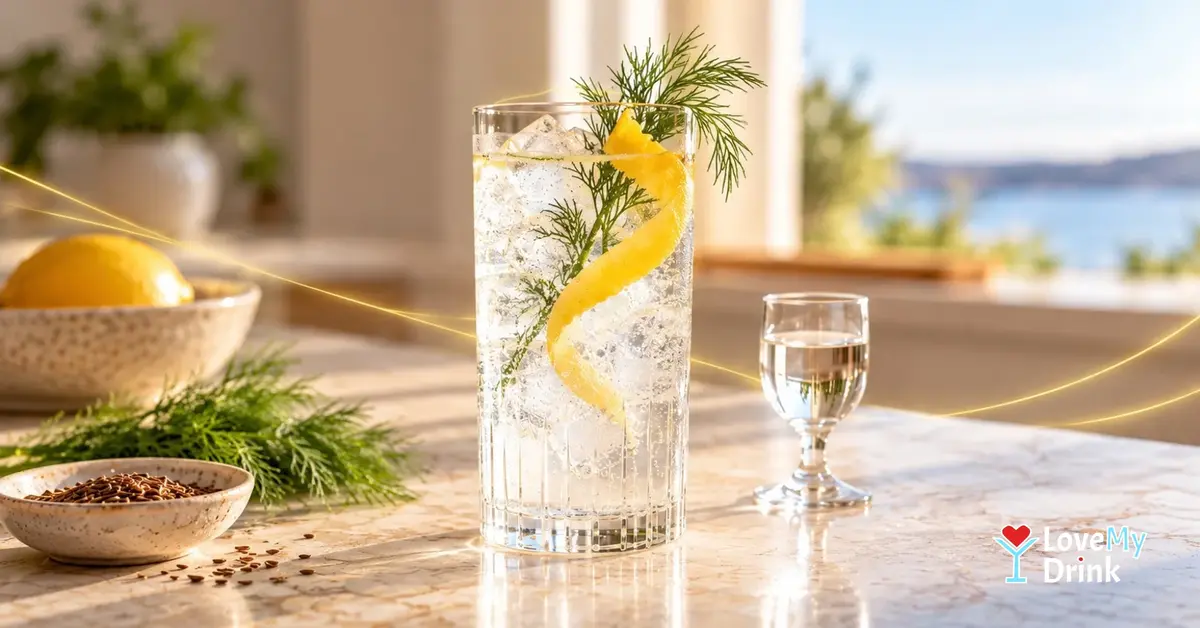
This is the easiest first mixed drink if you already understand a Gin and Tonic. Tonic keeps the drink crisp and bitter while letting the aquavit’s botanicals stay visible.
Ingredients
- 50 ml aquavit (1.7 oz)
- 120–150 ml tonic water (4–5 oz)
- Ice
- Optional: lemon peel, grapefruit peel or a small dill sprig
How to make it
- Fill a highball glass with plenty of ice.
- Add the aquavit.
- Top with cold tonic water.
- Stir once or twice and add a simple garnish if you like.
Quick tip: Start with 120 ml (4 oz) tonic. If the aquavit feels too intense, add a little more. If the botanicals disappear, use less next time.
3. Try Aquavit & Ginger Beer
Ginger beer is the softer landing. Its spice and sweetness can round off a bottle that feels too herbal, caraway-heavy or sharp on the first sip.
Ingredients
- 50 ml aquavit (1.7 oz)
- 120 ml ginger beer (4 oz)
- 10 ml fresh lime juice (0.35 oz)
- Ice
- Optional: lime wedge
How to make it
- Fill a highball glass with ice.
- Add the aquavit and fresh lime juice.
- Top with ginger beer.
- Stir gently and taste before adding anything else.
This is the version to make when your first neat sip says, “interesting, but maybe not like that.”
If quick highballs are your thing, our easy 2-ingredient cocktails are a good next stop for the same low-effort approach.
If aquavit tastes too strong, herbal or strange
- Too caraway-heavy: add citrus, tonic or grapefruit flavors to brighten the savory edge.
- Too herbal: try ginger beer or a little more dilution instead of adding more sweetness immediately.
- Too hot: chill the bottle, add ice or use a longer highball. You are changing temperature and dilution, not failing a tasting test.
- Too quiet in a mixed drink: reduce the mixer before reaching for a stronger bottle.
- Too woody: add bubbles and citrus. Oak that feels heavy neat can become much easier in a long drink.
Change one thing at a time. That is the fastest way to learn what you actually like about the bottle.
How to choose your first bottle of aquavit
Do not start by hunting for the rarest bottle or the most traditional label. Start with the kind of drink you already enjoy.
- Gin drinker: look for a clear, herbal, dill-led or citrus-forward style.
- Whisky drinker: look for a barrel-aged style with oak and spice.
- Curious about the classic aquavit profile: choose a caraway-forward bottle.
- Planning to mix: choose a bottle described as bright, crisp or cocktail-friendly rather than a premium sipping expression.
Do not get stuck on whether the base spirit started from grain or potatoes. Both appear in aquavit traditions. For a beginner, the defining botanicals and whether the spirit is aged will tell you more about what your first glass is likely to feel like.
Aquavit for beginners: quick FAQ
What is aquavit made from?
Aquavit is made from agricultural alcohol flavored with distillates of plants or spices. Under EU rules, caraway, dill seed or both must provide much of its defining flavor. Traditional aquavits may use grain- or potato-based spirit, but aquavit is not defined simply as a potato spirit.
Is aquavit the same as vodka?
No. Vodka is generally built around a clean, neutral profile. Aquavit is deliberately botanical, with caraway and/or dill at the center of its identity.
Is aquavit the same as gin?
No. Gin is defined by juniper. Aquavit is defined by caraway, dill seed or both. They can fill similar roles in simple highballs, but they do not taste the same.
Should aquavit be served cold?
It depends on the style. Clear Nordic aquavits are often served chilled, while barrel-aged Norwegian-style aquavits are commonly enjoyed less cold so the oak and spice stay more expressive. For a first bottle, compare a small chilled sip with one that has warmed slightly and keep the version you prefer.
Can you drink aquavit straight?
Yes. A small neat pour is the best baseline because it shows you what the bottle tastes like before tonic, ginger, citrus or ice change it.
What is the best mixer for aquavit?
Tonic is the easiest starting point if you like gin. Ginger beer is more forgiving if the aquavit feels sharp or strongly herbal. Grapefruit and other citrus flavors also work well with many styles.
What is the difference between aquavit and akvavit?
They are spelling variants of the same spirit category. You may also see akevitt on Norwegian bottles. The name changes with language; the core idea stays the same.
Start with one bottle, not a collection
Your first aquavit does not need a history lesson, a frozen shot ritual or a shelf of Nordic bottles. Start with the flavors you actually notice, then choose the serve that makes those flavors easier to enjoy.
If you like this one-bottle approach to unfamiliar spirits, try our Mezcal for Beginners guide next. Same idea: keep the first experiment simple enough that you can actually taste what changed.
One bottle. Three easy serves. That is enough to find out whether aquavit deserves a place in your home bar.