Bramble Cocktail Recipe: Gin, Lemon & Blackberry Over Crushed Ice
Approx. 6 min read
Why this Bramble works
A Bramble is bright, tart and fruity without turning into a sweet berry drink. Gin gives it structure, fresh lemon keeps it sharp, simple syrup softens the citrus and crème de mûre brings the blackberry finish.
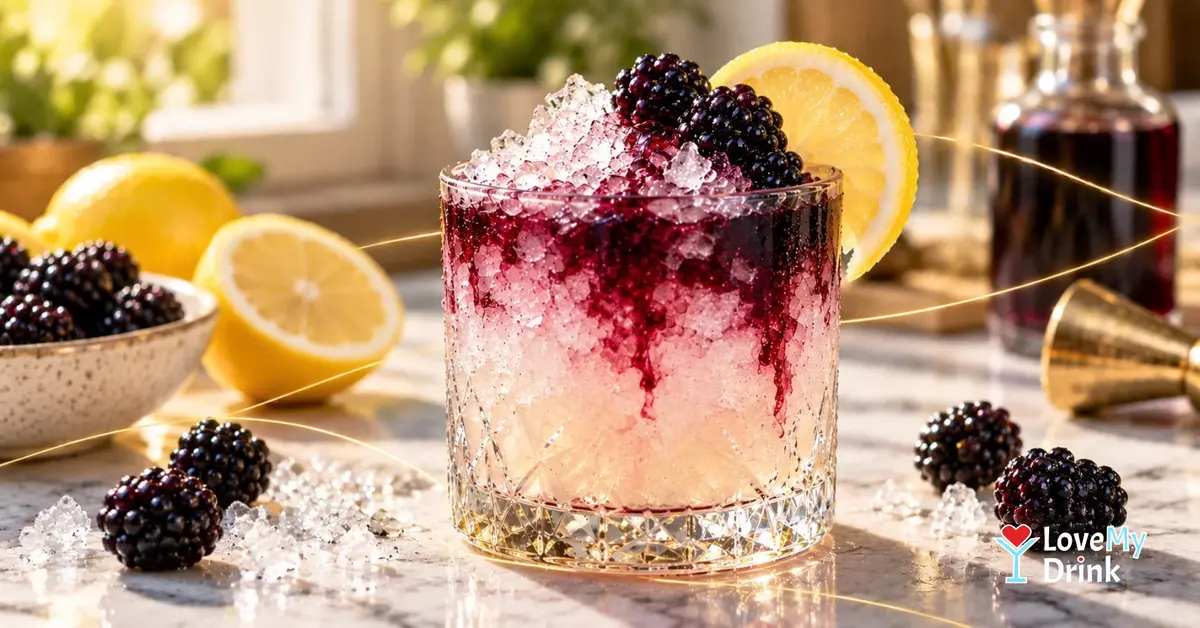
The trick is the order. Shake the gin, lemon and syrup first, strain that over crushed ice, then pour the crème de mûre over the top. It slowly works its way through the ice and creates the dark berry streaks that make a Bramble instantly recognisable.
Bramble cocktail recipe
Recipe details
- Difficulty: Easy
- Prep time: 4 minutes
- Tools: Cocktail shaker, jigger, strainer
- Glass: Rocks or old fashioned glass
- Taste: Tart, fruity, citrusy and botanical
- Serves: 1 cocktail
- Best served: Over a generous mound of crushed ice
Ingredients
- 50 ml / 1.7 oz gin
- 25 ml / 0.85 oz fresh lemon juice
- 12.5 ml / 0.4 oz simple syrup
- 15 ml / 0.5 oz crème de mûre
- Plenty of crushed ice
- 1–2 fresh blackberries and a thin lemon slice, for garnish
How to make it
- Fill a rocks or old fashioned glass generously with crushed ice.
- Add the gin, fresh lemon juice and simple syrup to a cocktail shaker.
- Fill the shaker with regular ice and shake firmly for about 10–12 seconds, until very cold.
- Strain the drink over the crushed ice.
- Pour the crème de mûre slowly over the top in a loose circular motion. Let it run naturally through the ice rather than stirring it in.
- Top with a little more crushed ice if needed, garnish with fresh blackberries and a thin lemon slice, and serve straight away.
Love My Drink tip: Keep the crème de mûre out of the shaker. Pouring it over the finished drink gives you the signature berry-streaked look and lets the blackberry flavour move through the glass as you sip.
Why crushed ice matters in a Bramble
Crushed ice is part of the drink, not just decoration. It chills the cocktail quickly, gives the Bramble its frosty texture and catches the blackberry liqueur as it runs down through the glass.
Do not crush the ice into snow. A rough mix of small pieces and pebbles works better and holds its shape longer. If you want a simple home method, our guide to the best ice for cocktails shows how to make crushed ice without a dedicated machine.
If you only have regular cubes, the drink will still taste good, but it will lose some of the texture and visual effect that make a Bramble feel like a Bramble.
What gin works best in a Bramble?
A classic London Dry gin is the easiest starting point. Its juniper and citrus notes stay clear beside the lemon and blackberry instead of disappearing under the fruit.
You do not need the most expensive bottle on the shelf. Choose a dry gin with a clean botanical profile and avoid anything so sweet or heavily flavoured that it starts competing with the crème de mûre.
Use the syrup as your sweetness dial
The classic starting point here is 12.5 ml / 0.4 oz simple syrup. Because crème de mûre already brings sweetness, small syrup changes are enough to move the whole drink.
- Sharper: use 10 ml / 0.33 oz simple syrup.
- Balanced starting point: use 12.5 ml / 0.4 oz.
- Softer and slightly sweeter: use 15 ml / 0.5 oz.
Keep the gin, lemon and crème de mûre the same while you test the syrup. One small change at a time makes it much easier to find your preferred balance.
If you like this kind of bright gin-and-citrus structure, our Gimlet recipe uses the same simple idea: start with a dependable ratio, then tune the sweetness rather than guessing.
Can you use Chambord in a Bramble?
Crème de mûre is blackberry liqueur, and it gives the Bramble its classic dark berry character. It is the best choice when you want the drink to taste and look as intended.
Chambord can work in a pinch, but it is a different berry liqueur with a softer, sweeter profile. The drink will still be enjoyable, but it will not taste exactly like a classic Bramble.
Fresh blackberries are not a direct replacement for crème de mûre either. You can muddle berries into a gin sour for a fresh-fruit variation, but you will lose the concentrated liqueur flavour and the signature drizzle through the ice.
How to garnish and serve a Bramble
Keep the garnish simple. One or two fresh blackberries and a thin lemon slice are enough. The crushed ice and deep purple streaks are already doing most of the visual work.
Serve the drink immediately. Crushed ice melts faster than a large cube, so the Bramble is at its best while the glass is still very cold and the berry layer is working its way down through the drink.
Bramble FAQ
What is crème de mûre?
Crème de mûre is a sweet blackberry liqueur. In a Bramble, it adds concentrated berry flavour, colour and the dark drizzle over the crushed ice.
Do I really need crushed ice for a Bramble?
For the classic serve, yes. Crushed or pebble ice gives the drink its frosty texture and helps create the signature layered look. Regular cubes will work if that is all you have, but the result will feel different.
Can I use frozen blackberries as a garnish?
Yes. They are useful when fresh berries are out of season. Add them at the end rather than shaking them into the drink unless you deliberately want a muddled blackberry variation.
Is a Bramble sweet or sour?
It should taste balanced rather than obviously sweet. Fresh lemon keeps the drink tart, while simple syrup and crème de mûre round out the edges and add fruit.
Can I make a Bramble without a cocktail shaker?
Yes. A tightly sealed jar can chill the gin, lemon and syrup in the same way. Shake with ice, strain over crushed ice, then add the crème de mûre on top.
Make it once the classic way
The Bramble looks dramatic, but the method is wonderfully simple: shake the gin, lemon and syrup, pour over crushed ice, then let the blackberry liqueur fall through the glass.
Make the classic version first. After that, use the syrup dial to move it a little sharper or softer without losing what makes the drink work.
For another bright gin classic, try the French 75. If you want the easiest possible pour with the same bottle of gin, make a classic Gin and Tonic.