Frozen Fruit Instead of Ice in Cocktails: What Actually Works
Approx. 11 min read
The quick answer: frozen fruit can replace ice — sometimes
Frozen fruit can be a brilliant way to keep a simple drink cold while adding color, flavor and a little visual magic. But it is not a perfect one-for-one substitute for ice.
Ice is part of cocktail balance because it chills the drink and adds water as it melts. Frozen fruit chills too, but then it starts becoming an ingredient. It softens, releases juice, changes color and can make the final few sips taste different from the first.
- Best all-rounder: frozen grapes
- Best for tropical drinks: frozen pineapple
- Best for easy highballs: frozen blueberries
- Best when you want visible fruit flavor: strawberries or peach
- Most dramatic as they thaw: raspberries and blackberries
If you want the drink to taste exactly as designed, use real ice. If you would happily add the fruit's flavor to the cocktail anyway, frozen fruit can be a very good move.
For the bigger picture on chilling and dilution, our guide to the best ice for cocktails explains what regular cubes, large cubes and crushed ice actually change in the glass.
Disclosure: This article contains affiliate links. If you buy through one of these links, Love My Drink may earn a commission at no extra cost to you. As an Amazon Associate, we earn from qualifying purchases.
What actually happens as frozen fruit thaws
This is where the idea gets interesting. A frozen grape and an ice cube may both start cold, but they do not finish the same way.
As frozen fruit warms, ice crystals inside the fruit melt and the flesh softens. Freezing can damage plant cell walls, so thawed fruit is usually softer and more likely to release juice than fresh fruit. That means the cocktail slowly picks up more fruit flavor, color and sweetness as you drink it.
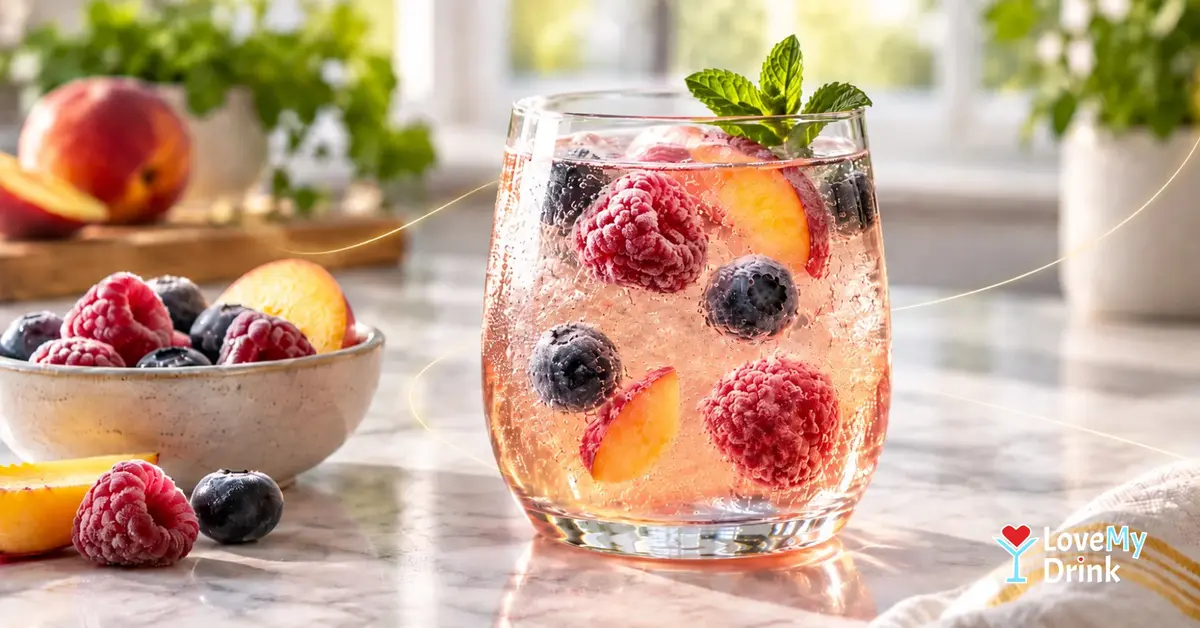
That effect can be lovely. A pale vodka soda with blueberries may become slightly more purple. A spritz with frozen peach can become more aromatic. Frozen strawberries can gradually make a clear or pale drink taste noticeably fruitier.
But this is why “frozen fruit means no dilution” is too simple. Fruit contains water too. The real difference is that the changing liquid is bringing fruit flavor with it rather than only plain melted ice.
The texture change is normal. The University of Minnesota Extension explains that ice crystals formed during freezing can rupture plant cell walls, making thawed produce softer.
The best frozen fruits to use instead of ice
Some fruits stay neat and useful in the glass. Others quickly become soft, colorful and very involved. Here is how the most useful options behave.

1. Frozen grapes — the best all-rounder
Frozen grapes are the easiest place to start. They stay fairly tidy, fit naturally into wine glasses and do not release a huge amount of flavor straight away.
Best with: prosecco, sparkling wine, spritzes, gin and tonic, white wine and light highballs.
As they thaw: they soften gradually and become sweeter to eat, but the drink itself usually changes less dramatically than it would with berries or sliced fruit.
Verdict: the closest thing here to a clean, low-mess ice alternative.
2. Frozen blueberries — small, easy and surprisingly useful
Blueberries are compact, easy to portion and look good in tall clear drinks. They are especially useful when you want a little fruit without turning the glass into a full fruit salad.
Best with: vodka soda, gin and tonic, lemonade, tonic-based mocktails and light sparkling drinks.
As they thaw: the skins soften and the drink may slowly pick up a purple-blue tint, especially if the berries are squeezed or stirred around.
Verdict: very good for simple drinks where a little color is part of the fun.
3. Frozen pineapple — best when you want the flavor
Pineapple is not neutral, and that is exactly why it works. A few frozen chunks can cool a rum or tequila drink while making it taste more tropical as they thaw.
Best with: rum highballs, tequila drinks, tropical punches, pineapple cocktails and alcohol-free tropical drinks.
As it thaws: it becomes juicier and softer, adding noticeable pineapple sweetness and aroma.
Verdict: excellent when pineapple already belongs in the flavor profile. If you want to see frozen fruit become part of a drink's texture rather than simply sit in the glass, our Virgin Piña Colada uses frozen pineapple as a practical way to thicken the blend.
4. Frozen strawberries — pretty, fruity and not subtle
Frozen strawberries make a drink look instantly summery, but they change more than grapes do. Use them when you actively want strawberry flavor, not when you are trying to keep a cocktail neutral.
Best with: vodka drinks, spritzes, lemonade, rum drinks and berry-forward mocktails.
As they thaw: they soften quickly, release red color and can make the drink noticeably sweeter and fruitier.
Verdict: beautiful and delicious in the right glass, but definitely an ingredient rather than invisible cooling.
For a drink where frozen strawberries are intentionally built into the texture, see our Frozen Strawberry Daiquiri.
5. Frozen peach — great with bubbles
Peach works beautifully in sparkling drinks because its aroma feels natural with wine, prosecco and light spritz-style cocktails.
Best with: prosecco, sparkling wine, sangria, spritzes and light vodka drinks.
As it thaws: sliced peach becomes soft fairly quickly and starts adding a gentle peach aroma and sweetness.
Verdict: one of the nicest pairing-specific choices, especially when bubbles are involved.
6. Raspberries and blackberries — beautiful, but messy
Dark berries are the dramatic option. They look gorgeous in pale drinks, but they soften and bleed color more quickly than grapes or blueberries.
Best with: gin drinks, vodka drinks, lemonade, sparkling cocktails and berry mocktails.
As they thaw: expect stronger color, softer fruit and more obvious berry flavor. Raspberries in particular can start breaking apart in the glass.
Verdict: great when the changing color is part of the appeal. Less good when you want a perfectly clean-looking drink until the last sip.
7. Frozen mango — better blended than floating
Mango is delicious, but it is not my first choice as an ice substitute in a clear cocktail. Cubes become soft and can make the drink feel a little chunky as they thaw.
Best with: tropical rum drinks, tequila drinks and blended cocktails.
As it thaws: it becomes very soft and adds a richer, sweeter fruit character.
Verdict: use it when mango is meant to be a real ingredient. For most drinks, it is better in the blender than floating in the glass.
The easiest fruit-to-cocktail match guide
- Prosecco or sparkling wine: frozen grapes or peach
- Gin and tonic: frozen grapes or blueberries
- Vodka soda: blueberries, grapes or strawberries
- Rum highball: pineapple or dark berries
- Spritz: peach, strawberries or grapes
- Sangria: grapes, berries or peach
- Tropical cocktails: pineapple or mango
- Lemonade and simple mocktails: blueberries, strawberries or raspberries
Think of the fruit as a slow-release ingredient. The better its flavor already fits the drink, the better this trick works.
When you should still use real ice
Frozen fruit is fun, but there are plenty of drinks where actual ice is doing an important job.
- Shaken cocktails: Margaritas, Daiquiris and sours need efficient chilling and controlled dilution while you shake.
- Stirred spirit-forward drinks: cocktails such as an Old Fashioned or Negroni depend on dilution for balance, not only cold temperature.
- Drinks where fruit flavor does not belong: if you want the original cocktail to stay exactly the same, do not introduce a new ingredient halfway through the glass.
- Very tall drinks that need lots of cooling: a few pieces of frozen fruit may look cold without providing the same amount of chilling as a glass packed properly with ice.
Frozen cocktails are another category again. There, ice and fruit can both become part of the final texture. Our Frozen Margarita guide shows why the amount of ice matters when you are blending rather than simply serving a drink over something cold.
Fruits I would skip as an ice substitute
Banana
Great in blended drinks. Not great floating around a highball. It softens quickly, looks heavy in the glass and can make the drink cloudy.
Large citrus chunks
Frozen lemon, lime or orange pieces can be useful in some punches, but big wedges are awkward as an everyday ice replacement. You also get peel and pith in prolonged contact with the drink. Fresh citrus is usually a better garnish.
Watermelon
It looks perfect for the job, but thawed watermelon becomes soft and watery quickly. Use it when watermelon flavor is the whole point, not when you simply want something cold in the glass.
Very ripe soft fruit
If the fruit is already delicate before freezing, expect it to become even softer once it thaws. Save those pieces for blending instead.
How to freeze fruit for cocktails
The easiest method is to freeze pieces individually first. That way you can grab exactly what you need instead of attacking one solid block of fruit five minutes before friends arrive.
- Wash the fruit and dry it thoroughly.
- Remove stems, pits or tough peel where needed.
- Cut larger fruit into pieces that will comfortably fit the glass.
- Spread the pieces in one layer on a tray so they are not touching.
- Freeze until solid.
- Transfer the frozen fruit to a sealed freezer container or bag.
- Use it straight from the freezer rather than thawing it first.
For a simple ready-to-grab setup, reusable silicone freezer bags work well for grapes and berries. Small freezer-safe containers with lids are useful when you want separate portions, while compartmented freezer trays with lids make it easy to keep different fruit portions organised.
The same tray-freezing method is also recommended by food-preservation guidance because freezing individual pieces first helps stop unsweetened fruit from clumping together.
5 tips that make frozen fruit work better
- Chill the drink first. Frozen fruit works much better in an already-cold cocktail than in warm liquid straight from the shelf.
- Use fruit that is frozen solid. Partly thawed fruit gives you less cooling and more immediate juice release.
- Start with a small amount. You can always add more fruit. A glass packed with berries can quickly become more snack than cocktail.
- Choose unsweetened frozen fruit. Fruit packed in syrup or with added sugar changes the drink before you have even tasted it.
- Expect the last sip to be different. That is part of the idea. If you do not want the drink to evolve, use ice instead.
For pitchers and party drinks, add delicate frozen fruit fairly close to serving rather than letting it sit for hours. If you are batching the drink itself, our batch cocktail guide explains how to control chilling and dilution without letting the whole pitcher slowly change.
FAQ about using frozen fruit instead of ice
Does frozen fruit keep cocktails as cold as ice?
It can keep a drink cold, but the result depends on how much fruit you use, the size of the pieces and how cold the drink is to begin with. A few frozen grapes are not the same as filling a tall glass with firm ice cubes. For the best result, chill the drink and glass first, then add frozen fruit.
Does frozen fruit stop a cocktail becoming diluted?
Not completely. It can reduce the amount of plain melted ice entering the drink, but fruit contains water and releases juice as it thaws. The drink still changes — just in a fruitier way.
Can I use store-bought frozen fruit in cocktails?
Yes. Choose plain, unsweetened fruit without syrup or added sugar. Smaller whole fruits and neatly cut pieces are usually easiest to use straight from the freezer.
Can I use frozen fruit in non-alcoholic drinks?
Absolutely. Frozen berries, grapes, peach and pineapple can work especially well in lemonade, tonic drinks, sparkling water and simple mocktails.
How long should frozen fruit stay in the glass?
There is no fixed time because fruit size and drink temperature vary. The best texture is usually while the fruit is still partly frozen. Once it fully thaws, expect it to become softer and release more flavor and color.
The simple rule worth remembering
If you would happily add that fruit's flavor to the cocktail, try freezing it. If you want the drink to stay exactly the same, use ice.
Frozen grapes are the easiest all-rounder. Pineapple is brilliant when tropical flavor is welcome. Berries are beautiful when you want the glass to change as you drink it.
It is a tiny freezer trick, but in the right drink it makes the whole glass feel more fun. And yes — you will probably start keeping a bag of frozen grapes ready after this.