How to Batch Cocktails Without Making Them Watery
Approx. 12 min read
The quick answer: batch the base, control the water
The easiest way to keep a batch cocktail balanced is to separate what can be prepared early from what should be added at the last moment.
- Multiply every still ingredient by the same number.
- Test one drink before deciding how much water the batch needs.
- Chill the ingredients and the finished base before serving.
- Keep soda, tonic, prosecco and other bubbles out until the end.
- Add ice to the glasses rather than letting it melt in the main container.
Water is not automatically the problem. A controlled amount softens alcohol and helps the flavors come together. The watery finish appears when melting ice keeps changing the drink while it waits.
Choose the right batching method
Not every cocktail should be batched in exactly the same way. Start with the serving method, then decide where the chilling and dilution will happen.
1. Fully batch and pre-dilute
Combine the non-carbonated ingredients with a measured amount of cold water, then chill the complete batch before serving. This works best for still cocktails that would normally be stirred or shaken and strained.
Negroni-style drinks, Manhattans and other spirit-forward cocktails are good candidates. Citrus cocktails can also work, but they need fresh juice, careful chilling and a shorter make-ahead window.
2. Batch the base and finish each glass
Combine the spirit, liqueur, juice and syrup ahead of time, but leave out anything carbonated. Pour a measured amount of base into each glass, add ice and finish with soda, tonic, ginger beer, prosecco or another sparkling ingredient.
This is the safest method for spritzes, highballs and fizzy party drinks because it protects the bubbles and keeps every serving fresh.
For a more relaxed self-serve setup, you can use the same principle on a larger scale. Our punch bowl cocktails for 10 guests use chilled bases and last-minute bubbles to make party service much easier.
3. Batch the base, then shake or stir each serving
Prepare the undiluted base in advance, measure one serving into a shaker or mixing glass, add ice and finish it normally. You still make each drink individually, but the measuring is already done.
Choose this method when texture matters or when you do not want to commit to full pre-dilution before tasting the finished drink.
Batching also changes how you should plan your ice. If you are making drinks for a group, use our guide to how much ice to buy for a party to plan separate amounts for glasses, cocktail-making, chilling and reserve.
How to scale a cocktail recipe
Scaling works when every ingredient stays in the original proportion. The larger quantities may look surprising, but changing only one part can throw the whole batch out of balance.
- Choose one dependable single-drink recipe.
- Decide how many servings you need.
- Multiply every still ingredient by the number of servings.
- Keep sparkling ingredients, garnishes and serving ice separate.
- Write down the final quantities before you start pouring.
For example, a drink with 50 ml / 1.7 oz spirit, 25 ml / 0.85 oz citrus and 20 ml / 0.7 oz liqueur becomes 400 ml / 13.5 oz spirit, 200 ml / 6.8 oz citrus and 160 ml / 5.4 oz liqueur for eight servings.
Taste the batch cold before changing anything. Warm cocktails can seem sweeter, stronger or less connected than the same drink at the correct serving temperature.
For ready-made crowd recipes, start with our party cocktails you can make in a pitcher.
For a wine-based example, our make-ahead red sangria for a crowd applies the same idea to 6, 10 or 20 guests, with sparkling water and serving ice kept until the end.
Useful tools for accurate batching
A large measuring jug makes bigger quantities easier to track and helps you see the total batch volume. For smaller additions, a jigger is still useful because a 10 or 15 ml difference can noticeably change a balanced recipe.
Measure first, then pour. It is a small habit that prevents the most expensive ingredient from becoming the accidental correction.
How to calculate dilution for a batch cocktail
There is no single water percentage that works for every drink. A shaken Margarita, a stirred Manhattan and a cocktail served over ice do not dilute in the same way. The most useful home method is to test the exact recipe once before scaling it.
- Measure the total volume of one drink before adding ice.
- Prepare it exactly as you normally would: shake or stir with ice, then strain.
- Measure the finished drink as accurately as you can.
- Subtract the starting volume from the finished volume.
- Multiply that difference by the number of servings in the batch.
Treat the result as a practical starting point, not a laboratory measurement. A little liquid stays on the ice and inside the shaker, and small ice chips can affect the reading.
For example, if your test drink appears to gain 20 ml after mixing, an eight-serving batch would start with up to 160 ml cold water. Add most of it, chill the batch, then taste a small serving before adding the rest. If the cocktail will be served over fresh ice, it may need less pre-dilution because the glass will add more water over time.
If you use a Margarita as your test drink, our Margarita ratio guide gives you a dependable tequila, lime and orange liqueur starting point.
How to chill a batch without watering it down
Cold ingredients give you more control. Warm liquid melts serving ice quickly, so a batch that tastes balanced in the kitchen can become thin by the second round.
- Chill every ingredient first. Spirits, juice, syrup and mixers should go into the batch cold whenever possible.
- Refrigerate the finished batch. Let the container become properly cold instead of relying on a last-minute scoop of ice.
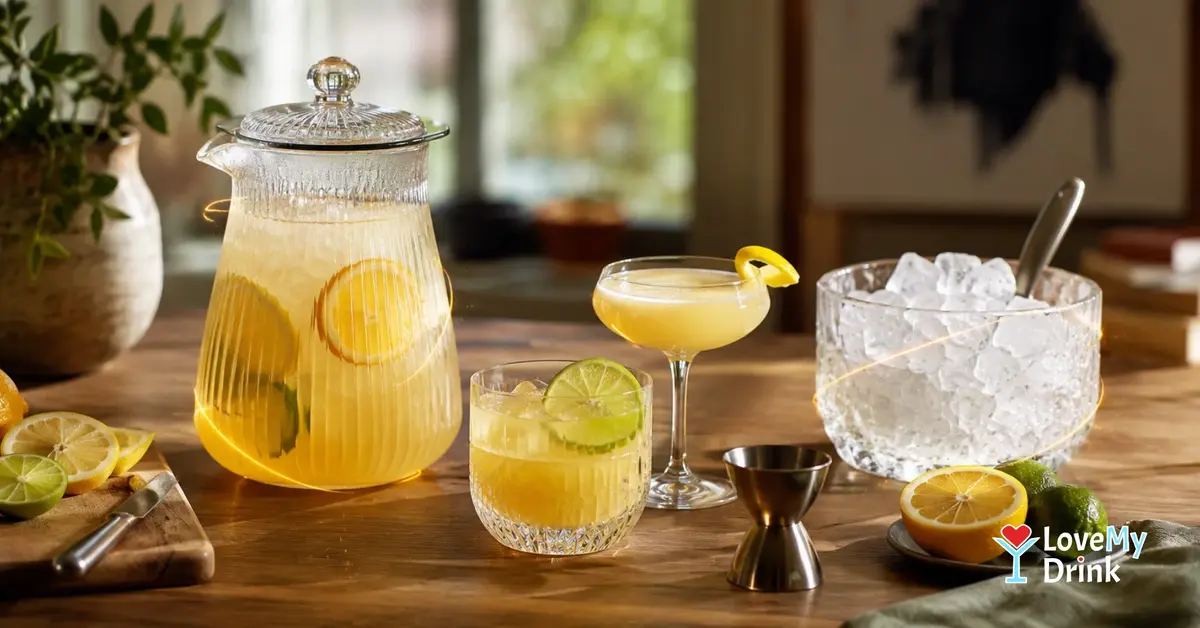
- Use a covered container. A lidded glass bottle or carafe makes the batch easy to store, pour and protect in the fridge.
- Keep serving ice separate. Fill glasses as needed instead of letting one large pile melt into the batch.
- Serve smaller amounts at a time. Keep the refill bottle cold and place only one smaller carafe or pitcher on the table.
The batch should be cold before it meets the ice. That one change prevents much of the watery finish people blame on batching itself.
What to add early and what to add later
Spirits, liqueurs and syrups
These are usually the easiest ingredients to combine in advance. Measure them carefully, stir well and keep the container covered and chilled.
Fresh citrus
Fresh lemon and lime juice taste brightest when used close to serving. For a same-day party, add them to the chilled base a few hours ahead. For longer preparation, batch the shelf-stable ingredients first and add the citrus later.
Soda, tonic, prosecco and sparkling wine
Add bubbles at the last possible moment. For the freshest result, top each glass individually. If you need to finish a whole pitcher, pour the sparkling ingredient in gently just before serving and stir as little as possible.
A French 75 is a perfect example of this method: batch the gin, lemon and syrup first, then shake each portion and add Champagne only when serving. Our French 75 recipe includes exact quantities for both one drink and a four-drink base.
Mint, basil and delicate fruit
Fresh herbs and soft fruit can lose their clean flavor or make a batch look tired when they sit too long. Prepare them ahead, but add them close to serving. Keep muddling gentle, especially with mint.
Ice
Ice usually belongs in the glass unless the recipe has been designed and timed around ice in the serving vessel. Adding it to a pitcher too early creates a moving target: the first glass may taste strong and the last one weak.
The type of serving ice matters too. If you are deciding between regular cubes, one large cube and crushed ice, use our cocktail ice guide to match the ice to the drink style.
How far ahead can you batch cocktails?
The answer depends more on the ingredients than on the cocktail name.
- Spirit-forward drinks without fresh juice: often suitable for preparing the day before when covered and refrigerated.
- Cocktails with fresh lemon or lime: best prepared on the day of the party and kept cold.
- Carbonated cocktails: prepare only the still base ahead, then add the sparkling ingredient at serving time.
- Drinks with mint, basil or delicate fruit: add the fresh elements close to serving so the flavor stays clean.
- Cocktails with dairy, egg or other highly perishable ingredients: keep them properly chilled and prepare them as close to serving as practical. They are not the easiest choice for casual self-service.
When you are unsure, batch the stable base rather than the complete drink. It gives you speed without giving up freshness.
How far ahead you can prepare a drink usually comes down to the ingredient that ages fastest. If you are unsure about opened vermouth, fresh juice, syrup, sparkling mixers or spirits, use our home bar storage guide to see what needs refrigeration, what should be used quickly and what can safely stay on the bar cart.
Quick batching guide by drink style
Margarita or Daiquiri
Batch the spirit, fresh citrus and sweetener. Calculate dilution from one test drink, chill the mixture well and taste a small serving before the party.
Negroni or Manhattan
These still, spirit-forward cocktails are good candidates for full batching and measured pre-dilution. Keep the batch cold and serve in chilled glasses or over fresh ice, depending on the recipe.
Spritz or highball
Batch only the still base. Add soda, tonic, ginger beer or sparkling wine to each glass so the drink stays lively.
Mojito-style drink
Combine rum, lime and syrup ahead of time. Add mint, soda and ice close to serving. Do not leave heavily muddled mint sitting in the batch for hours.
Sangria or fruit punch
The still base can benefit from some time in the fridge, but add bubbles and serving ice later. Taste before serving because fruit and juice sweetness can vary.
For a practical small-party example, our one-bottle party drinks menu for 8 guests uses the same make-ahead approach across two vodka cocktails and one sparkling mocktail.
Want to see that method in a complete recipe? Our make-ahead white sangria for a crowd shows exactly what to chill early, what to add at the last minute and how to scale the pitcher for 6, 10 or 20 guests.
How to rescue a batch that tastes wrong
If it tastes too strong
First make sure it is properly cold. Then add cold water in small measured amounts, stir and taste again. Do not pour in a large amount at once.
If it tastes too sweet
Add a small amount of fresh citrus or another unsweetened ingredient already used in the recipe. Keep the original flavor direction instead of adding something unrelated.
If it tastes too sour
Add syrup or a sweet ingredient from the original recipe in small increments. Stir thoroughly before tasting because sweetness can hide when the batch is not fully mixed.
If it is already watery
Strengthen it with a fresh, undiluted portion of the original base in the same ratio. Adding only more spirit may make the drink hotter without restoring the citrus and sweetness balance.
If it is too warm
Move the container back to the fridge or place the closed bottle in an ice bath. Do not solve a warm batch by filling it with loose ice and waiting.
If it tastes flat
Add fresh bubbles to each glass, use a bright garnish and check whether the drink needs a small lift of citrus. Flat soda cannot be stirred back to life.
Common batch cocktail mistakes
- Multiplying the alcohol but guessing the juice, syrup or liqueur.
- Adding a full pitcher of ice long before guests arrive.
- Putting carbonated ingredients into the batch too early.
- Tasting the drink warm and adjusting it before it is properly chilled.
- Using one dilution number for every cocktail style.
- Making a large batch without testing one serving first.
- Trying to rescue a weak batch with spirit alone.
A single test drink solves most of these problems. It shows how the recipe behaves with your ingredients, ice and serving method before you commit to the full batch.
Batch cocktail FAQ
Should I put ice in a batch cocktail?
Usually, keep ice out of the main batch and add it to individual glasses. This prevents the drink from becoming steadily weaker while it waits.
Can I batch cocktails the night before?
Spirit-forward drinks are the best candidates. For cocktails with fresh citrus, herbs or bubbles, prepare the stable base ahead and add the delicate ingredients closer to serving.
How much water should I add to a batch cocktail?
Test one serving using your normal shaking or stirring method, estimate how much volume it gains, then multiply that amount by the number of servings. Add slightly less at first when the batch will be served over ice.
How do I batch a cocktail with soda or prosecco?
Batch the non-carbonated ingredients only. Chill the base, pour a measured serving into each glass and add the soda or prosecco last.
Do I need special equipment to batch cocktails?
No. Clear measurements, a covered container and enough fridge space matter more than professional bar equipment. Our home bar essentials guide covers the simple tools that are genuinely useful.
Make the party easier, not the drink weaker
A good batch cocktail is not just a larger recipe. It is a plan for measuring, chilling, dilution and timing.
Test one drink. Keep the base cold. Add bubbles and ice at the right moment. Then pour something that tastes as balanced in the last glass as it did in the first.
Affiliate disclosure: This article contains affiliate links. As an Amazon Associate, Love My Drink earns from qualifying purchases at no extra cost to you.