Ginjinha: Portugal’s Cherry Liqueur You Can Serve in a Chocolate Cup
Approx. 5 min read
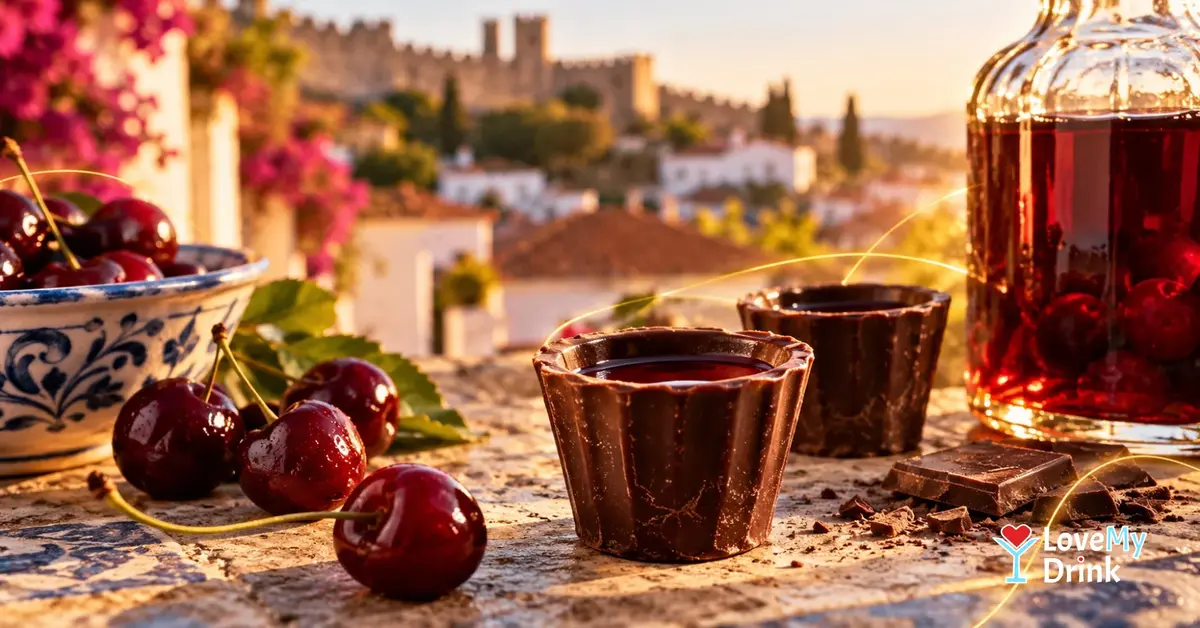
Ginjinha in a Chocolate Cup: The Óbidos Way
Imagine a dark-chocolate cup arriving on a saucer, filled with deep-red cherry liqueur. You take a sip, then eat the cup. In the walled Portuguese town of Óbidos, this is one of the most memorable ways to enjoy ginjinha — and it's wonderfully easy to borrow for an evening at home.
There's a reason the pairing works beyond the novelty. Ginjinha is sweet and fruity, but sour cherries give it a tangy edge. Dark chocolate adds a hint of bitterness. First comes the cherry, then the cocoa. The cup is part of the flavour, not just a cute trick.
How to serve it in a chocolate cup
- Place a small, edible dark-chocolate liqueur cup on a saucer. Use a proper chocolate cup, not a large dessert bowl.
- Just before serving, pour in 15–20 ml (½–⅔ oz) of ginjinha, or a little less if the cup is tiny.
- Sip the liqueur, then eat the chocolate. Serve straight away rather than filling the cups in advance.
No chocolate cups? Don't let that stop you. A small glass and a square of good dark chocolate on the side give you the same lovely cherry-and-cocoa contrast.
What Is Ginjinha, Exactly?
Despite the first three letters, ginjinha has nothing to do with gin. It's a Portuguese liqueur made by steeping sour cherries, known as ginjas, in alcohol and sweetening the infusion with sugar. You'll also see the drink called ginja.
In Lisbon, ginjinha is the sort of drink you stop for at a neighbourhood bar: a small glass at the counter, a quick chat, then back out onto the street. Óbidos has made the chocolate-cup serve especially famous. In either place, there's no cocktail recipe to learn.
What Does Ginjinha Taste Like?
Think dark cherries with a sweet-tart bite, rich fruit and a warming finish. If you enjoy the fruity part of cherry jam but wish it had more tang, you're in the right neighbourhood. It's unmistakably a liqueur, though, so expect sweetness rather than the dryness of a classic spirit.
Not every bottle tastes alike. Some are brighter and sharper; others are rounder and more syrupy. That's worth knowing before you decide whether to drink yours at room temperature, lightly chilled or with dark chocolate alongside.
Buying tip: Look for Portuguese ginja or ginjinha on the label. Some bottles contain whole soaked cherries and others don't. Choose one with fruit if you specifically want to try the com elas serve below, and check the bottle for strength and storage instructions.
The Easiest Way to Serve Ginjinha at Home
Take a small liqueur glass and pour about 20–30 ml (¾–1 oz). That's the whole serve. Ginjinha is ready to drink, so there's nothing to shake, stir or balance with other ingredients.
At room temperature, the cherry aroma can be easier to notice. Lightly chilled, the drink can feel fresher, especially if your bottle is on the sweeter side. Neither is a mistake. For a first taste, I'd pour it neat and decide what I'd change only after that first sip.
If you have a cherry in the bottle, adding one is optional. You don't need a garnish to make this feel special.
With or Without the Cherry? Two Portuguese Phrases to Know
There are two Portuguese phrases worth remembering if you ever order ginjinha in Portugal. They're useful at home, too:
- Com elas — with the soaked cherries in the glass.
- Sem elas — without the cherries; just the ruby-red liqueur.

Neither is the better or more authentic choice. If you like fruit at the end, go com elas. If you want to concentrate on the liqueur itself, choose sem elas. One practical detail: soaked cherries may still have stones, so check before biting into one.
A Love My Drink Idea: The Two-Pour Cherry Tasting
If you want to make more of a bottle of ginjinha without making a cocktail, try this after dinner. Give each guest two samples, about 15 ml (½ oz) each: one at room temperature and the other lightly chilled. Which one brings the cherries forward? Does the cold make the sweetness easier to enjoy? There's no right answer, and it gives everyone something to talk about.
Put a square of dark chocolate beside each place. Try the liqueur first, then the chocolate, and notice how the cocoa changes the finish. That's the interesting part of Óbidos's edible-cup idea, even with ordinary glasses.
The Love My Drink finishing touch: If you have chocolate cups, use one in place of an ordinary glass rather than adding another pour. Fill it just before serving, then let the cup be dessert. It feels like an occasion without needing an elaborate drinks menu.
Ginjinha FAQ
Are ginja and ginjinha the same thing?
When people are talking about the drink, usually yes. Ginja is also the Portuguese name for the sour cherry used to make it. Ginjinha is a familiar name for the liqueur.
Do you drink ginjinha warm or cold?
You can serve it at room temperature or chilled. Try it each way if you're curious. Follow the maker's instructions for storing the bottle; serving temperature and storage requirements aren't necessarily the same thing.
Can I mix ginjinha with something less sweet?
Yes, although the simplest Portuguese-style serve is a small glass on its own. For an easy at-home variation, pour 30 ml (1 oz) ginjinha over ice and add 60–90 ml (2–3 oz) chilled soda water. It won't be the classic bar ritual, but it's a handy way to make a rich bottle feel lighter.
No cocktail equipment, no complicated recipe. Just sour cherries, a thoughtful way to serve them and, if you like, a cup that turns into dessert. It's exactly the kind of pleasure Love My Drink is here for: something easy to make happen, and genuinely lovely to share.