Pisco Sour Recipe: Perfect Foam With or Without Egg
Approx. 6 min read
Classic Pisco Sour Recipe
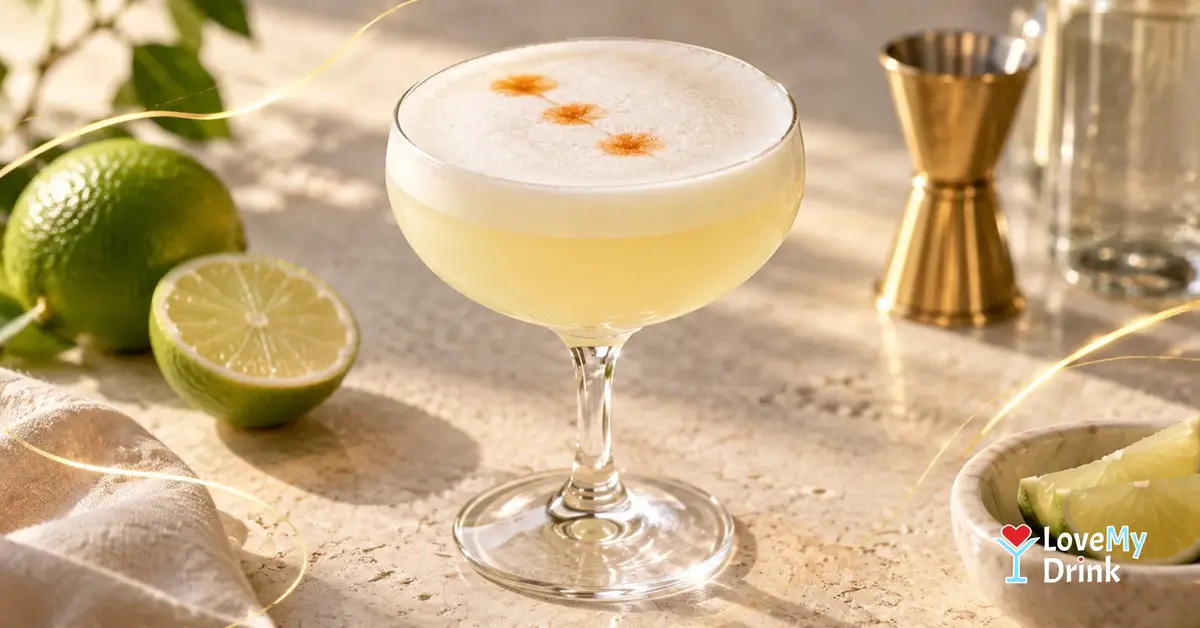
Fresh lime, fragrant pisco and a cloud-like cap finished with bitters: this classic feels special without demanding bar skills.
Recipe details
- Difficulty: Easy
- Prep time: 5 minutes
- Tools: Cocktail shaker, jigger, strainer; fine strainer optional
- Taste: Fresh, citrusy, lightly sweet and silky
- Serves: 1 cocktail
- Best served: Straight up in a chilled coupe or small cocktail glass
Ingredients
- 60 ml (2 oz) pisco, preferably a Peruvian quebranta or acholado
- 30 ml (1 oz) freshly squeezed lime juice
- 20 ml (0.7 oz) 1:1 simple syrup
- 15–20 ml (0.5–0.7 oz) pasteurised liquid egg white
- 2–3 drops of aromatic bitters, such as Angostura or Amargo Chuncho
- Ice, for shaking
How to make it
- Chill a coupe or small cocktail glass while you prepare the drink.
- Pour the pisco, fresh lime juice, simple syrup and pasteurised egg white into a cocktail shaker. Do not add ice yet.
- Close the shaker securely and shake hard without ice for about 15 seconds. This is the dry shake that starts building your foam.
- Add plenty of firm ice, reseal and shake vigorously for another 10–15 seconds, until the shaker feels very cold.
- Fine-strain into your chilled glass. Give the foam a few seconds to settle, then finish with 2–3 small drops of aromatic bitters.
Love My Drink tip: Make the first glass exactly as written. The 60:30:20 balance is easy to remember, and a measured first pour makes any later adjustment much simpler.
Egg-Free Pisco Sour With Aquafaba
No egg? Aquafaba, the liquid from cooked chickpeas, also foams when shaken. For the easiest version, use unsalted liquid from a tin of chickpeas.
Egg-free ingredients
- 60 ml (2 oz) pisco
- 30 ml (1 oz) fresh lime juice
- 20 ml (0.7 oz) 1:1 simple syrup
- 20 ml (0.7 oz) unsalted aquafaba, from cooked or tinned chickpeas
- 2–3 drops of aromatic bitters
- Ice, for shaking
How to make the egg-free version
- Add the pisco, lime juice, syrup and aquafaba to a shaker without ice.
- Shake firmly for 15–20 seconds to aerate the aquafaba.
- Add ice and shake again for 10–15 seconds, until well chilled.
- Fine-strain into a chilled coupe, let the foam rise, then dot the surface with bitters.
Egg White vs Aquafaba: Which Foam Is Better?
- Pasteurised egg white: Usually creates a smooth, fine-bubbled cap and a soft, silky mouthfeel. This is the classic choice.
- Unsalted aquafaba: Can give you a lovely foam without egg, though it may be a little airier. Thickness and staying power vary between tins.
Both keep the lime and pisco centre stage. For the egg-free version, start with 20 ml aquafaba and shake well. If the foam is thin, try another unsalted brand rather than adding extra syrup.
How to Get That Beautiful Silky Foam
The dry shake works air into the egg white or aquafaba. The second shake, with ice, chills and dilutes the drink. Strain promptly, then let the bubbles settle into a smooth cap.
Fix common Pisco Sour foam problems
- Hardly any foam? Make sure you measured the egg white or aquafaba, then give the dry shake a full 15 seconds. Aquafaba may need a little longer.
- Big, uneven bubbles? Fine-strain the drink and give the surface 10–20 seconds to settle before decorating it.
- Foam disappears quickly? Use fresh ingredients and firm ice. Avoid leaving the finished drink sitting in the shaker after the ice shake.
- Bitters fall through the foam? Add just a few small drops once the foam has settled, rather than pouring a generous dash onto one spot.
A well-sealed shaker is all you need. New to shaking? Our cocktail shaker guide shows the basics.
How to Balance Your Pisco Sour
The foam draws the eye; the sweet-sour balance keeps you sipping. Use the 60:30:20 starting ratio, then adjust in small steps.
Three easy adjustments
- Too tart? Add 5 ml (0.2 oz) more 1:1 simple syrup next time.
- Too sweet? Reduce the syrup by 5 ml (0.2 oz), rather than adding more pisco.
- Not enough grape character? Try a more expressive pisco. An acholado can be a friendly place to start; you do not need an expensive bottle.
Pisco is a grape brandy, and its aromas vary by bottle. Our beginner's guide to pisco explains the main styles.
These measures assume a standard 1:1 syrup. Richer 2:1 syrup is sweeter at the same volume; see our simple syrup ratio guide if you are unsure.
Pisco Sour FAQ
Does a Pisco Sour need egg white?
No. Aquafaba gives you an egg-free foamy version. If you skip both, shake the pisco, lime and syrup once with ice and strain; the drink will be bright and refreshing, just without a creamy cap.
Is it safe to use egg white in a cocktail?
Because the egg white is not cooked, choose pasteurised liquid egg white and follow its storage instructions. Unpasteurised raw egg carries a food-safety risk. If you would rather avoid egg altogether, use aquafaba.
Will aquafaba make my Pisco Sour taste like chickpeas?
Not usually. Unsalted aquafaba is mild, while the pisco and lime take the lead. If a tin tastes strong or makes thin foam, switch brands.
Should I use lemon or lime in a Pisco Sour?
Fresh lime is the starting point for this Peruvian-style recipe. Lemon makes a pleasant variation, but it changes the citrus character. For the most consistent result, start with fresh lime before experimenting.
What is the best pisco for a Pisco Sour?
A Peruvian quebranta or acholado works beautifully, but a pisco you already enjoy is a sensible starting point. The goal is a clean grape aroma that can still be tasted alongside the lime.
Can I make a Pisco Sour without a shaker?
A sturdy jar with a genuinely leakproof lid can work. Shake without ice first, carefully open it, add ice, shake again and strain. A shaker is easier, especially for a few cocktails.
One Good Ratio, Two Lovely Versions
Choose classic egg white or egg-free aquafaba, then let fresh lime, pisco and that silky finish do the rest. It looks like an occasion. It is surprisingly easy.
Love a silky sour? Try our Whiskey Sour recipe next and see how the same technique changes with a different spirit.