How to Measure Cocktails Without a Jigger
Approx. 8 min read
The quick answer: 1 oz is about 2 tablespoons
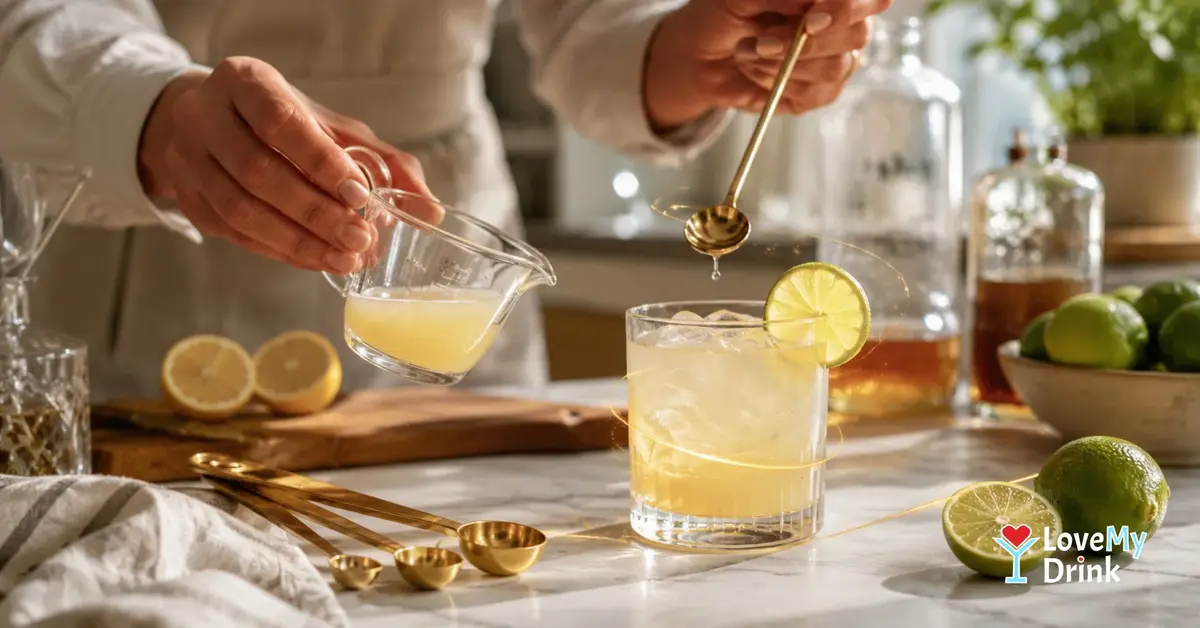
If a cocktail recipe asks for 1 US fluid ounce, use about 30 ml or 2 level measuring tablespoons. For 1/2 US fluid ounce, use 15 ml or 1 level tablespoon. That one conversion is enough to make a surprising number of drinks.
- 1 teaspoon: about 5 ml
- 1 tablespoon: about 15 ml or 1/2 US fl oz
- 2 tablespoons: about 30 ml or 1 US fl oz
Use marked measuring spoons rather than an ordinary spoon from the cutlery drawer. Household spoons vary, while a proper measuring spoon gives you a repeatable pour.
Worldwide note: This guide assumes a 15 ml measuring tablespoon. Tablespoon sizes can differ by country, so use the printed milliliter markings when available. If your tablespoon is marked 20 ml, follow the ml amounts or use 5 ml teaspoons instead.
Cocktail measurement conversion chart
Use these as practical home conversions for recipes written in milliliters or US fluid ounces.
- 5 ml: 1 teaspoon
- 7.5 ml: 1 1/2 teaspoons
- 10 ml: 2 teaspoons
- 15 ml / 1/2 US fl oz: 1 tablespoon
- 20 ml: 1 tablespoon + 1 teaspoon
- 22.5 ml / 3/4 US fl oz: 1 tablespoon + 1 1/2 teaspoons
- 25 ml: 1 tablespoon + 2 teaspoons
- 30 ml / 1 US fl oz: 2 tablespoons
- 45 ml / 1 1/2 US fl oz: 3 tablespoons
- 50 ml: 3 tablespoons + 1 teaspoon
- 60 ml / 2 US fl oz: 4 tablespoons
- 75 ml / 2 1/2 US fl oz: 5 tablespoons
- 90 ml / 3 US fl oz: 6 tablespoons
- 120 ml / about 4 US fl oz: 8 tablespoons or about 1/2 US cup
Important: A dining spoon, dessert spoon and measuring tablespoon are not automatically the same size. For repeatable cocktails, use a tool with printed measurements.
The best ways to measure cocktails without a jigger
You do not need to guess the level in the glass or count seconds while pouring. Start with the most clearly marked tool you already own.
1. Use marked measuring spoons
Measuring spoons are the best substitute for small cocktail pours. They work especially well for citrus juice, syrup, liqueur and single servings of spirits.
- Use a level spoon, not a heaped one.
- Measure over a small cup before adding the liquid to your glass or shaker.
- Measure the main ingredients before adding ice so the recipe stays easy to check.
The only downside is speed. Four tablespoons of rum takes longer than one pour from a jigger, but the result can still be accurate and balanced.
2. Use a small marked liquid measuring cup
A small measuring cup is easier when the recipe uses 50 ml, 60 ml or a larger amount of mixer. Choose one with clear ml markings and read it on a level surface.
This method is especially useful for Gin and Tonics, highballs, punches and any drink where measuring several spoonfuls would turn a simple cocktail into a chore.
3. Use a marked shot glass
A shot glass can replace a jigger only when it has clear measurement lines or you have checked its capacity with a measuring spoon. Unmarked shot glasses are not a standard size, so filling one to the top may give you more or less than the recipe expects.
4. Measure by parts
When a recipe is written as a ratio, you can use almost any small vessel. The important part is using the same measure for every ingredient.
For a 2:1:1 drink, use 2 measures of the spirit, 1 measure of citrus and 1 measure of liqueur or syrup. A teaspoon creates a tiny tasting portion. A tablespoon creates a small cocktail. A 30 ml cup gives you a larger single serve.
The vessel changes the quantity. It does not change the proportion.
Missing more than one piece of bar equipment? These easy cocktails you can make without a shaker keep the whole setup simple.
How to measure four popular cocktails without a jigger
The easiest way to understand the conversions is to use them in real drinks. These examples follow current Love My Drink recipes, with kitchen-spoon equivalents added.
Margarita
Our Margarita ratio guide starts with 50 ml tequila, 25 ml fresh lime juice and 20 ml orange liqueur.
- Tequila — 50 ml: 3 tablespoons + 1 teaspoon
- Lime juice — 25 ml: 1 tablespoon + 2 teaspoons
- Orange liqueur — 20 ml: 1 tablespoon + 1 teaspoon
This is a good example of why small measures matter. One extra tablespoon of orange liqueur would noticeably change the sweetness and balance.
Daiquiri
The classic Daiquiri recipe uses 60 ml rum, 22.5 ml lime juice and 15 ml simple syrup.
- White rum — 60 ml: 4 tablespoons
- Lime juice — 22.5 ml: 1 tablespoon + 1 1/2 teaspoons
- Simple syrup — 15 ml: 1 tablespoon
The half-teaspoon measure is useful here. Rounding 22.5 ml all the way up to 30 ml would make the Daiquiri much more sour.
Mojito
Our easy Mojito recipe uses 50 ml white rum, 25 ml fresh lime juice and 15 ml simple syrup before the soda water is added.
- White rum — 50 ml: 3 tablespoons + 1 teaspoon
- Lime juice — 25 ml: 1 tablespoon + 2 teaspoons
- Simple syrup — 15 ml: 1 tablespoon
Measure the rum, lime and syrup carefully, then add soda water to taste. The fizzy mixer is more forgiving than the sweet-and-sour base.
Gin and Tonic
The classic Gin and Tonic starts with 50 ml gin and 100–150 ml tonic water.
- Gin — 50 ml: 3 tablespoons + 1 teaspoon
- Tonic — 100–150 ml: use a marked measuring cup, then adjust to taste
You could count tablespoons for the tonic, but this is exactly where a small cup is faster and cleaner.
Why some shortcuts are less reliable
Not every familiar bar hack gives you a repeatable drink. These methods may get liquid into the glass, but they make balance harder to control.
- An unmarked shot glass: capacities vary, and the rim does not tell you how many milliliters it holds.
- A bottle cap: caps differ between bottles and are easy to spill.
- Finger widths: glass shapes and hand positions change the amount dramatically.
- Counting while free pouring: pour speed depends on the bottle, pourer, angle and your timing.
- Guessing against the side of the cocktail glass: curved glasses make visual volume estimates difficult.
These shortcuts may be enough for a casual spirit-and-mixer drink. They are much less useful for Margaritas, Daiquiris and other short cocktails where a small change can take over the whole glass.
When a jigger is still worth buying
A jigger is not essential for making one good cocktail. It becomes useful when you make drinks regularly and want every round to taste the same.
- You often use 5 ml or 10 ml adjustments.
- You make sours, Martinis or other spirit-forward cocktails.
- You prepare several drinks in a row.
- You want a faster pour with less washing up.
- You want to repeat a recipe exactly next time.
A jigger is one of the genuinely useful basics, but it does not need to be your first purchase. Our home bar essentials guide explains which tools make a real difference and which ones can wait.
If you are ready to move beyond kitchen substitutes, start with our beginner guide to cocktail tools. It shows which pieces are worth buying first and which upgrades can wait until you actually need them.
Quick tips for more consistent cocktails
- Use the same measuring system for the entire drink.
- Choose marked spoons, cups or glasses whenever possible.
- Set a measuring cup on a level surface before reading the line.
- Measure the main ingredients before adding ice.
- Make the recipe as written once before changing the ratio.
- Adjust citrus, syrup or liqueur in 5 ml steps.
Good measurement is less about owning professional equipment and more about making the pour repeatable. A level measuring spoon is more useful than a confident guess.
How to measure cocktails without a jigger: FAQ
How many tablespoons equal 1 oz?
About 2 level 15 ml measuring tablespoons equal 1 US fluid ounce, or approximately 30 ml.
Can I use a tablespoon instead of a jigger?
Yes. Use a marked 15 ml measuring tablespoon. One tablespoon gives you about 1/2 US fluid ounce, and two tablespoons give you about 1 US fluid ounce.
Is a shot glass the same as a jigger?
Not automatically. A marked shot glass can work, but unmarked shot glasses come in different sizes. Check the capacity before using one as a measuring tool.
How do I measure 3/4 oz without a jigger?
Use 1 tablespoon plus 1 1/2 teaspoons. That gives you approximately 22.5 ml or 3/4 US fluid ounce.
Can I make cocktails using parts instead of ounces?
Yes. Use the same spoon, cup or small glass for every part. A 2:1:1 recipe could be 2 tablespoons, 1 tablespoon and 1 tablespoon, or any larger matching measure.
Measure what matters, then enjoy the drink
No jigger does not mean no cocktail. Marked measuring spoons, a small cup or one simple ratio can get you surprisingly close to a professional measure.
Start with 1 tablespoon for 15 ml and 2 tablespoons for 30 ml. Keep the pour consistent, taste the drink cold and make one small adjustment only when it needs it. Simple tools are enough for a glass worth making again.