Tomatini: The Fresh Tomato Cocktail That Might Surprise You
Approx. 7 min read
What does a Tomatini taste like?
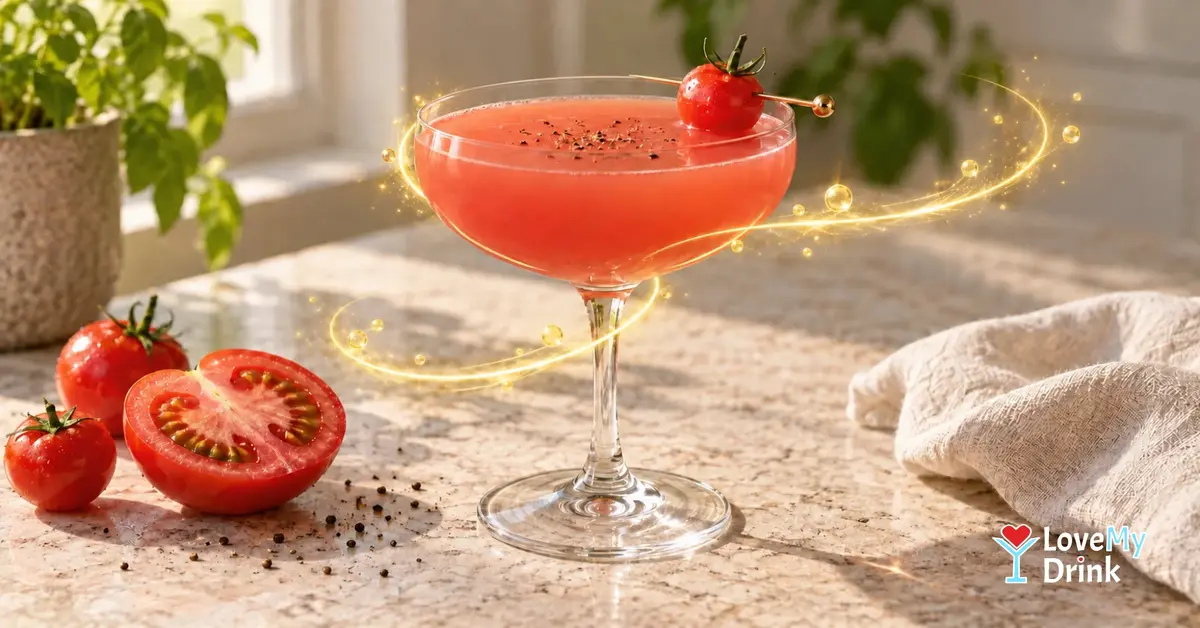
Think of a ripe tomato with a little salt, a tangy dressing and an icy vodka finish. A Tomatini is juicy, gently sweet and savoury, with enough acidity to keep each sip lively. The pepper adds a little bite. The tomato is very much the point.
That makes it an interesting first savoury cocktail if you enjoy fresh tomatoes but find a heavily seasoned Bloody Mary too much. It has a lighter texture and a different balance, although “lighter” here describes the feel, not the alcohol content.
Jimmy Barrat created the drink at LPM Dubai in 2010. LPM’s story of the Tomatini centres on fresh tomato, vodka, balsamic vinegar and gentle seasoning. It is an established restaurant signature that happens to make a lovely little kitchen project.
Easy Tomatini recipe
This home version follows the fresh-tomato formula in Imbibe’s recipe credited to Jimmy Barrat and LPM, with the vodka rounded to a practical 50 ml (1.7 oz). Use regular 1:1 simple syrup for the quantities below.
Recipe details
- Difficulty: Easy
- Prep time: 5 minutes, with syrup ready
- Tools: Shaker, muddler, jigger, shaker strainer and fine-mesh strainer
- Taste: Fresh tomato, sweet-tart, gently savoury and peppery
- Calories: Approximately 150–170 kcal, depending on vinegar, syrup and strained tomato yield
- Serves: 1 cocktail
- Best served: In a chilled coupe or martini glass, without ice
Ingredients
- 100 g ripe red tomatoes (3.5 oz by weight), stems removed and flesh chopped
- 50 ml vodka (1.7 oz)
- 10 ml white balsamic vinegar (0.33 oz)
- 7.5 ml 1:1 simple syrup (0.25 oz)
- A small pinch of fine salt
- A small pinch of freshly ground black pepper, plus a little for the finish
- Ice cubes, for shaking
- 1 cherry tomato, for garnish
How to make it
- Chill your serving glass. Put the chopped tomatoes in the shaker and muddle until juicy and broken down.
- Measure in the vodka, vinegar and syrup. Add the salt and pepper, then fill the shaker with ice.
- Shake firmly for about 10–15 seconds, until the shaker feels cold.
- Pour through the shaker strainer and a fine-mesh strainer into the empty chilled glass. Let it drain without forcing the pulp through.
- Finish with a light dusting of pepper and a cherry tomato on a cocktail pick. Serve immediately.
Expect a naturally cloudy drink, usually pale coral to pink-red. The exact shade depends on your tomatoes. A smooth pour matters more than a perfectly uniform colour.
Tomatini vs Bloody Mary: what actually changes?
Both drinks pair tomato with vodka and seasoning. The difference is how those ingredients are used.
- Tomato: This Tomatini starts with fresh fruit muddled in the shaker. A typical Bloody Mary uses tomato juice.
- Flavour: White balsamic and a little syrup give the Tomatini a sweet-tart balance. A Bloody Mary commonly gets a stronger savoury, spicy character from Worcestershire sauce, hot sauce and other seasonings.
- Texture: The Tomatini is fine-strained and served up. A Bloody Mary is usually a longer drink served over ice.
- Occasion: Try the Tomatini before dinner or alongside a few small bites. It does not need a brunch spread to make sense.
Despite the name, this recipe also differs from a gin-and-vermouth Martini: it contains fresh tomato and syrup, and you shake it. For the traditional drink, see our classic Martini recipe and gin-versus-vodka guide.
Choose your tomato and vinegar before you shake
Start with a tomato you would happily eat
Cut off a small piece and taste it. If it tastes watery or dull on its own, vodka will not give it the tomato flavour it is missing. Look for ripe, juicy tomatoes with a flavour you enjoy. Sweet cherry tomatoes work too; weigh them rather than relying on a fixed number.
Campari tomatoes are one option named in the LPM recipe. Here, Campari is a type of tomato, not the red Italian aperitif. You do not need that particular variety, and you do not add Campari liqueur.
Use pourable white balsamic vinegar
White balsamic gives the drink acidity with some sweetness. Bottles vary, so the same measure can taste softer with one brand and sharper with another. Use a pourable vinegar or white balsamic condiment, not a thick glaze.
Dark balsamic changes both the colour and flavour. It may make an interesting variation, but it will not give the pale, fresh result shown here. Plain white wine vinegar is a different ingredient too; avoid treating either as an automatic equal-measure swap.
Keep the syrup consistent
The recipe uses 1:1 syrup made with equal weights of sugar and water. Rich 2:1 syrup is more concentrated, so the same pour adds more sweetness. Our simple syrup guide explains both versions and how to make a small batch.
Too sharp, too sweet or a little flat?
Taste the chilled drink before adding more seasoning. Change one thing at a time; a small cocktail does not need a large correction.
- Too sharp: Stir in 2.5 ml 1:1 syrup (0.08 oz, or half a teaspoon), then taste again. If vinegar dominates rather than simply tasting tart, start the next drink with 7.5 ml vinegar (0.25 oz).
- Too sweet: Add 1.25 ml white balsamic (0.04 oz, or a quarter teaspoon), stir and reassess. For the next glass, try 5 ml syrup (0.17 oz).
- Flat but clearly tomato-flavoured: Try a few grains of salt or a very small extra grind of pepper. Stop before it tastes salty.
- Weak tomato flavour: Choose a more flavourful tomato for the next drink. Extra syrup or vinegar cannot replace the missing fruit character.
Why some tomato martinis look almost clear
Tomato-martini recipes take different routes. Some use tomato water that has been slowly filtered or clarified before mixing. This recipe uses freshly muddled tomato, so some cloudiness is normal.
Double straining catches seeds, skin fragments and larger pulp particles. It does not turn fresh tomato juice into clear tomato water. If your fine strainer clogs, pause and let it drain; pushing the solids through defeats the purpose. Our cocktail strainer guide shows how the two strainers work together.
A tiny experiment: the two-sip pepper check
Before adding the finishing pepper, take one small sip. Notice the tomato, sweetness and vinegar. Now add a very light grind of pepper to the surface and try a second sip.
Does the aroma make the tomato seem more savoury? Does the finish feel more lively, or do you prefer the softer first sip? There is no result you are meant to get. This is a quick way to find your preferred finish using the drink you have already made.
Keep the garnish simple afterwards. One cherry tomato is enough. Put out some olives, crackers or a little mozzarella, and the first round of a relaxed dinner is sorted.
Tomatini FAQ
Can I use bottled tomato juice?
You can experiment with it, but it changes the recipe. Bottled juice may already contain salt and other ingredients, and its flavour and texture differ from freshly muddled tomatoes. There is no dependable one-for-one substitution for 100 g of fresh fruit. Use fresh tomatoes for this version.
Can I make a Tomatini with gin?
Yes. Replace the vodka with 50 ml gin (1.7 oz) for a more botanical variation. Start with a gin you already enjoy, and expect its flavour to become part of the drink rather than disappear behind the tomato.
Does a Tomatini need lemon juice or vermouth?
Neither is needed in this recipe. The white balsamic supplies the added acidity. Other tomato-martini recipes use lemon, vermouth or both, so check which style you are following before combining their ingredient lists.
Can I make it ahead for guests?
Have the syrup ready and the glasses chilled. You can wash, chop and weigh the tomatoes shortly before serving, keeping them covered in the fridge until needed. Muddle, shake and strain close to serving time for the freshest result.
Give the tomato the good glass
A Tomatini turns a familiar kitchen ingredient into something worth pausing over. Start with a tomato that tastes good, measure the vinegar, and give it a clean strain. The surprise is already there; it does not need an elaborate garnish.