What Is Oktoberfest? What People Drink & Why It Starts in September
Approx. 7 min read
So, what is Oktoberfest really?
Oktoberfest is Munich’s huge traditional folk festival, held on the Theresienwiese — the open festival grounds locals simply call the Wiesn. Beer is a major part of the modern experience, but Oktoberfest is not just one enormous beer tasting. It is also music, food, rides, parades, traditional dress and packed festival tents that turn a corner of Munich into its own little world for a few weeks.
The story starts in 1810. Crown Prince Ludwig of Bavaria, later King Ludwig I, married Princess Therese of Saxe-Hildburghausen, and the public celebrations ended with a horse race on 17 October. The meadow was named Theresienwiese after the bride. The event returned, changed and grew — and eventually became the Oktoberfest people recognize today.
So the easiest way to think about it is this: Oktoberfest is a Munich folk festival where beer became one of the loudest characters, not the whole plot.
Why does Oktoberfest start in September?
This is the part that makes the name sound slightly wrong. The first festival really did happen in October, and Oktoberfest continued to begin in October for decades.
Then, from 1872, organizers moved the start into September. The reason was practical rather than mysterious: September usually offered warmer weather and longer days than October. The festival still runs into October, so the old name stayed.
That is why an “October festival” can spend most of its run in September. Once you know the weather logic, the calendar suddenly makes perfect sense.
What do people actually drink at Oktoberfest?
The headline answer is Oktoberfest beer, but that phrase hides a few details that are worth knowing. The beer at the Munich festival is not a random selection of German lagers, and modern Oktoberfest does not look exactly like the amber Märzen image many people have in their heads.
Oktoberfestbier and modern Festbier
At today’s Munich Oktoberfest, the familiar festival pour is usually a pale to deep-gold lager brewed especially for the Wiesn. In beer-style language, you will often see the modern pale festival style described as Festbier.
Expect a smooth, clean lager with a clear malt character, moderate bitterness and enough body to feel more substantial than an everyday pale lager. Many official Oktoberfest beers sit around 6% ABV, which is one reason a very easy-drinking Maß deserves a little respect.
What about Märzen?
Märzen is the older Oktoberfest story. Traditionally, it was a stronger lager brewed in March so it could mature and keep through the warmer months. By the late nineteenth century, amber Märzen had become closely tied to Oktoberfest.
That history is still real, but modern Munich Oktoberfest is not simply a sea of dark amber beer. Pale Oktoberfestbier is now the more familiar festival pour, while traditional amber Wiesnmärzen still appears in some places. If your mental picture of Oktoberfest beer is deep copper, you are looking at an important older chapter rather than the whole modern story.

Only six Munich breweries pour official Oktoberfest beer
This is one of the best Oktoberfest facts because it immediately shows how local the festival still is. Official Oktoberfest beer comes from six Munich breweries:
- Augustiner-Bräu
- Hacker-Pschorr
- Hofbräu München
- Löwenbräu
- Paulaner
- Spaten
So no, Oktoberfest is not an open showcase for every German brewery. The beer rules are part of the Munich identity of the event.
What is a Maß?
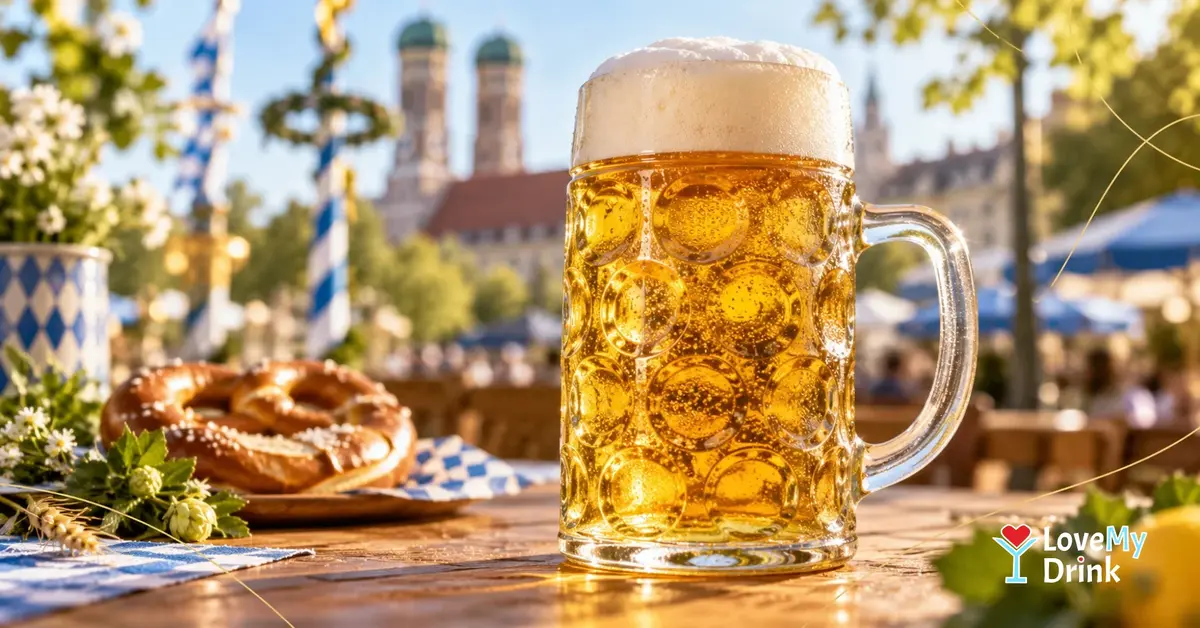
A Maß is a one-litre serving of beer in the heavy glass mug associated with the festival. The word refers to the measure, not to a type of beer.
English speakers often use “stein” as a general word for a big German beer mug. At the Wiesn, though, Maß is the useful word to know. And because one Maß is a full litre, it is much more than a standard bottle or pint.
Can you drink something other than beer?
Absolutely. Oktoberfest has a strong beer identity, but nobody needs to make beer their entire plan.
Non-alcoholic beer is available throughout the beer-serving venues. You will also find water, lemonade and Spezi, the German cola-and-orange soft drink mix. Wine and sparkling wine are part of the festival too, especially around the Weinzelt, or wine tent.
That makes the real drinks picture broader than the stereotype. Beer is the star, but it is not the only thing in the glass.
The Love My Drink Oktoberfest reality check
Oktoberfest gets flattened into a few familiar images online. Here is the quicker version of what is actually going on.
- You think: Oktoberfest happens in October. Actually: it now begins in September and usually finishes in early October.
- You think: it is simply a giant beer festival. Actually: it is Munich’s traditional Volksfest, with beer as a huge part of the experience.
- You think: any German beer can be served. Actually: official Oktoberfest beer comes from six Munich breweries.
- You think: Oktoberfest beer always means dark amber Märzen. Actually: pale Oktoberfestbier is central to the modern Munich festival, while Märzen remains an important part of the history.
- You think: beer is basically the only option. Actually: alcohol-free beer, water, soft drinks, wine and sparkling wine are all part of the real festival drinks menu.
That is the Oktoberfest shortcut: the stereotypes are not completely wrong — they are just incomplete.
What does Oktoberfest beer taste like?
If you usually drink light lager, Oktoberfestbier should still feel familiar. It is crisp and clean, but with more malt character, more body and usually a little more strength.
Think bread and gentle grain rather than heavy caramel. The hop bitterness is there to keep the beer balanced, not to turn it into an IPA. A good festival beer should feel satisfying but still easy to drink with food.
If you try a traditional amber Märzen beside a modern pale Festbier, the contrast becomes much easier to understand: Märzen usually leans darker, toastier and richer, while modern Festbier tends to feel brighter and more immediately drinkable. That side-by-side tasting is one of the simplest ways to understand why “Oktoberfest beer” can mean different things depending on where you are drinking it.
Oktoberfest FAQ
Why is it called Oktoberfest if it starts in September?
Because the original festival was held in October. The start moved into September from 1872 to make better use of warmer weather and longer days, while the historic name remained.
Is Oktoberfest only about beer?
No. Beer is central to the modern festival, but Oktoberfest is a wider folk festival with food, music, rides, parades, traditional dress and plenty of non-beer drinks.
What beer is served at Oktoberfest?
Official Oktoberfest beer comes from six Munich breweries: Augustiner-Bräu, Hacker-Pschorr, Hofbräu München, Löwenbräu, Paulaner and Spaten.
Is Oktoberfest beer the same as Märzen?
Not always. Märzen is historically important to Oktoberfest and is usually amber and maltier. The modern Munich festival is strongly associated with paler Oktoberfestbier in the Festbier direction, although traditional amber Wiesnmärzen can still be found.
How big is a Maß?
One Maß is one litre. At Oktoberfest, it is the classic large serving size for festival beer.
Can you get alcohol-free beer at Oktoberfest?
Yes. Non-alcoholic beer is available in the beer-serving venues, alongside water, lemonade, Spezi and other soft drinks.
Can you get wine at Oktoberfest?
Yes. Wine and sparkling wine are available, and Oktoberfest even has a dedicated wine tent.
Final sip
Oktoberfest makes more sense once you stop thinking of it as simply a giant beer party. It is a Munich folk festival with a royal-wedding origin, a September start that is all about better weather and a surprisingly specific beer identity built around six local breweries.
If festival culture is your thing, our guide to the Kentucky Bourbon Festival looks at another drinks celebration from the glass outward. If you would rather bring the autumn mood home, try one of our easy fall cocktails that stay cozy without getting heavy. And if Oktoberfest has inspired a bigger gathering, our party drinks planning guide helps you work out quantities without guessing.