Lemon Juice vs Lime Juice in Cocktails: When to Swap
Approx. 6 min read
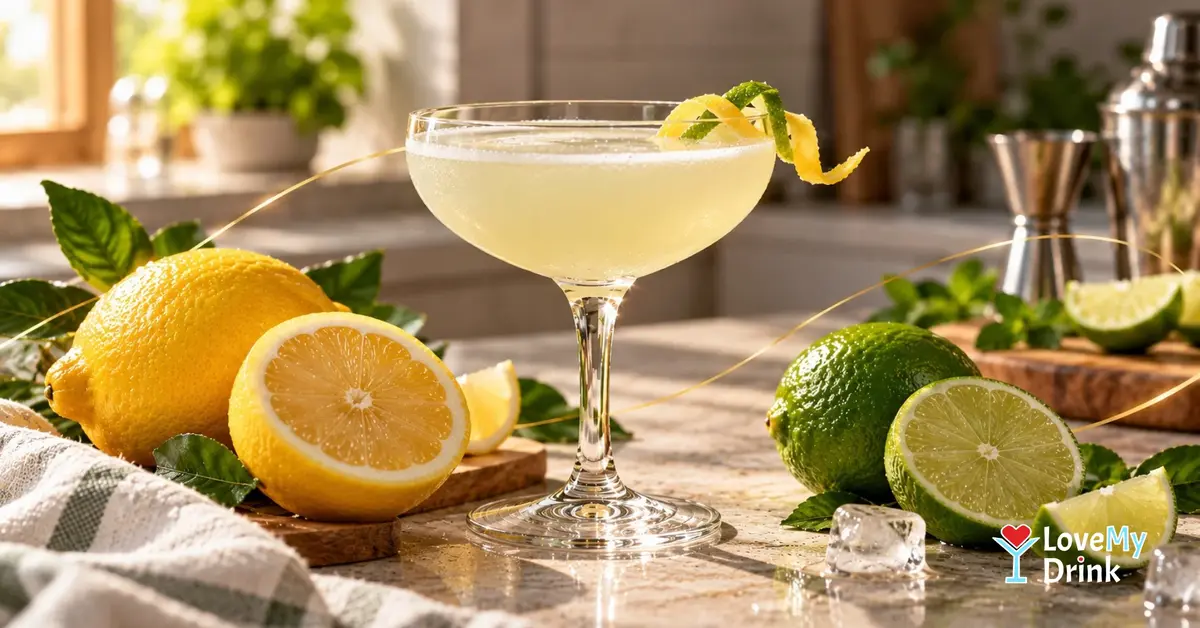
Can you substitute lemon for lime juice in cocktails?
Yes, often. Start with the same volume of unsweetened juice, then taste the finished drink. If a recipe uses 30 ml (1 US fl oz) of lime juice, try 30 ml (1 US fl oz) of lemon juice. The same starting rule works in reverse.
That is a practical starting point, not a promise of identical flavour or acidity. Measure the juice rather than swapping one whole fruit for another: lemons and limes do not necessarily give the same yield.
Both bring sourness. Neither brings exactly the other's aroma. Your drink can still be lovely; it just becomes a variation.
Lemon vs lime juice: what changes in the glass?
Think of lemon as familiar, lemonade-like brightness. Lime often feels greener and more assertive, sometimes with a slightly bitter edge. Those are useful tasting descriptions, not fixed rules for every fruit.
Do not assume lime is always more acidic. Both juices are rich in citric acid, and research has found similar concentrations in samples of fresh lemon and lime juice. The fruit in your kitchen still needs tasting.
Sweetness can soften a sour edge, but it cannot turn lemon flavour into lime flavour. That is why a balanced swap can still taste noticeably different.
Which cocktails can handle a citrus swap?
The quick rule: Swapping a squeeze in a long drink is easy. Swapping the main citrus in a sour creates a new variation. If you want the classic flavour, use the original fruit.
Easy swap: citrus is a finishing touch
- Vodka Soda - lemon or lime: Either works for a small squeeze over ice. Just remember that adding 25 ml (about 0.85 US fl oz) of juice is a new build, not simply a garnish.
Works as a twist: expect a different cocktail
- Margarita - classically lime: Lemon makes a bright variation. Swap equal volumes to begin, leave the tequila and orange liqueur unchanged, then taste.
- Daiquiri - classically lime: Lemon turns it into a lemon-led rum sour. The difference is easy to notice in a three-ingredient drink.
- Whiskey Sour - classically lemon: Lime makes a livelier-tasting variation for some palates. Do not add syrup automatically; taste first.
- Tom Collins - classically lemon: Lime changes its fresh, familiar lemon profile, even though the long gin-and-soda format can still taste lovely.
Keep the original for the familiar classic
- Mojito - classically lime: Mint and lime create its recognisable character. Lemon can be a refreshing riff, but it will not taste like the usual Mojito.
- Gimlet - traditionally lime juice or lime cordial: Lime is central here. Remember that sweetened lime cordial is not a measure-for-measure replacement for unsweetened juice.
These labels describe how much the flavour changes, not whether a substitution is allowed. If you want to learn what the classic tastes like first, start with our Whiskey Sour recipe before experimenting with lime.
How to adjust the balance after swapping
Change the citrus first, not everything at once. Keep the spirit and sweetener at their original measures, then prepare the drink normally so it is properly chilled and diluted.
- Taste the finished drink. A warm, undiluted mixture is not your final reference point.
- Too tart? For a full-size short cocktail, stir in 2.5 ml (about 0.08 US fl oz, or half a teaspoon) of 1:1 simple syrup. Taste again before adding more.
- Too sweet? Try 2.5 ml (about 0.08 US fl oz, or half a teaspoon) more of your chosen citrus juice. Mix and taste again.
- Balanced but unfamiliar? Stop adjusting. A different aroma does not automatically mean the drink needs more sugar or juice.
These are small tasting adjustments, not compulsory additions. Stir carbonated drinks gently; never shake them.
Use the same syrup strength throughout. Our simple syrup ratio guide explains why 1:1 and richer 2:1 syrup are not equivalent pours.
Try the two-glass citrus test
Want to taste the difference rather than guess? This tiny alcohol-free test takes a few minutes and uses the same sweetness and dilution for both juices.

- Make the lemon sample. In a small glass, combine 10 ml (about 0.34 US fl oz) fresh lemon juice, 5 ml (about 0.17 US fl oz) 1:1 simple syrup and 20 ml (about 0.68 US fl oz) cold water.
- Make the lime sample. Repeat those measures in an identical glass, using fresh lime juice. Keep the syrup, water and temperature the same.
- Smell before sipping. Which sample smells more floral, green or peel-like? Then take a small sip of each. Which seems sharper, rounder or longer-lasting? There is no right answer.
- Make your choice. Imagine each profile beside the spirit in your planned cocktail. If you try the substitute, start at 1:1 and adjust the completed, chilled drink in tiny steps.
Skip ice and garnishes in the samples so they do not introduce extra differences. This is a flavour comparison, not a measurement of acidity. And you do not need two full cocktails to find your preference.
Fresh vs bottled juice: does it change the swap?
Fresh juice makes a useful starting point for this comparison. Bottled juice can still be practical, but check the label: unsweetened juice, sweetened lime cordial, sour mix and lemonade are different ingredients.
Do not automatically add more syrup because the juice came from a bottle. Start with the recipe's measure, then taste. Products differ, and a sweetened mixer already changes the sugar balance.
A citrus twist can add aroma, but it cannot replace the sourness of the juice. Our citrus garnish guide helps with that finishing touch.
Lemon and lime cocktail swap FAQ
Is the lemon-to-lime substitution ratio always 1:1?
Treat equal volumes as a starting point for unsweetened juices, not a universal formula. Taste after chilling and make small corrections only if needed.
Can I make a Margarita with lemon juice?
Yes. Use the same juice measure initially and call it a lemon variation. Lime remains the choice for the classic flavour.
Is lime juice more acidic than lemon juice?
Not reliably enough to set your cocktail ratio by that rule. Both are strongly acidic; a sharper-tasting drink does not prove that its juice contains more acid.
What can I use if I have neither lemon nor lime?
Unsweetened bottled lemon or lime juice is a practical option. Orange juice, lemonade and sweetened cordial are not equivalent replacements. Otherwise, choose a drink that does not need sour citrus.
The best citrus is the one that suits the drink you want to make. Keep lime for that familiar Mojito, reach for lemon in a classic Whiskey Sour, or give your usual recipe a new little twist. Measure the juice, taste the drink cold and make just one small adjustment at a time. You might find a new favourite hiding in the fruit bowl.