Sangria Ratio Guide: The Easy Formula for Wine, Brandy, Fruit & Sweetness
Approx. 10 min read
The easiest Sangria ratio to remember
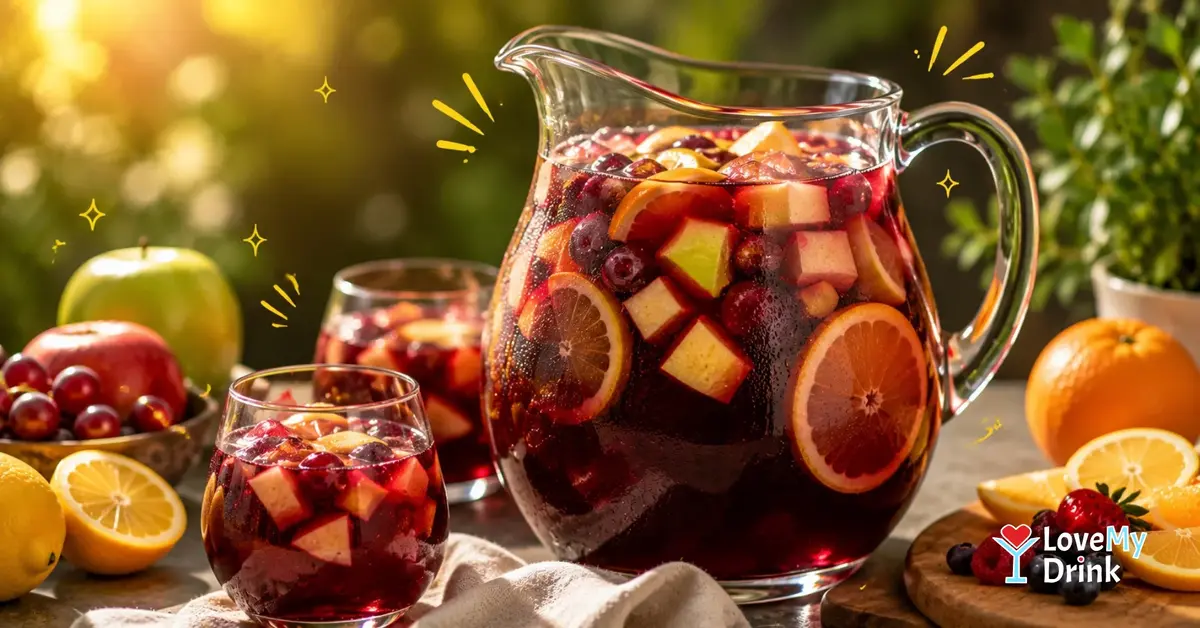
Start with one 750 ml / 25 oz bottle of dry wine and build around it. This gives you a repeatable base without pretending every wine, orange or peach tastes exactly the same.
- Wine: 750 ml / 25 oz dry red, white or rosé wine
- Brandy: 90 ml / 3 oz
- Fruit juice: 120 ml / 4 oz orange juice or another juice that suits the wine
- 1:1 simple syrup: 0–30 ml / 0–1 oz to start
- Fresh fruit: about 300–400 g / 10–14 oz, roughly 2–3 cups prepared
- Optional soda water: 180–300 ml / 6–10 oz, added just before serving
That is the formula worth remembering. Mix the wine, brandy, juice and fruit first, chill the pitcher, then taste before adding more sweetness or bubbles. A sweeter wine may need no syrup at all, while a very dry wine and tart fruit may need a little more.
If you use a sweet orange liqueur instead of some or all of the brandy, start with less syrup. The liqueur is already bringing sweetness as well as alcohol.
Scale Sangria without guessing
Once the one-bottle version tastes right, multiply every ingredient by the same number. Do not double the wine and then free-pour the brandy, juice or syrup.
For 1 bottle of wine
- 750 ml / 25 oz wine
- 90 ml / 3 oz brandy
- 120 ml / 4 oz juice
- 0–30 ml / 0–1 oz 1:1 simple syrup
- 300–400 g / 10–14 oz fresh fruit
- 180–300 ml / 6–10 oz soda water, optional
Expect roughly 5–7 servings, depending on whether you add soda water, how much fruit is in the pitcher and how generously you pour.
For 2 bottles of wine
- 1.5 L / 50 oz wine
- 180 ml / 6 oz brandy
- 240 ml / 8 oz juice
- 0–60 ml / 0–2 oz 1:1 simple syrup
- 600–800 g / 21–28 oz fresh fruit
- 360–600 ml / 12–20 oz soda water, optional
For 3 bottles of wine
- 2.25 L / 75 oz wine
- 270 ml / 9 oz brandy
- 360 ml / 12 oz juice
- 0–90 ml / 0–3 oz 1:1 simple syrup
- 900 g–1.2 kg / 32–42 oz fresh fruit
- 540–900 ml / 18–30 oz soda water, optional
A three-bottle batch is too large for many everyday pitchers once the fruit is added, so split it between two pitchers or use a larger serving container.
If you are planning drinks for a bigger group, our party drinks planning guide can help you estimate total servings before you decide how many batches to make.
How much brandy should you put in Sangria?
For one 750 ml / 25 oz bottle of wine, 90 ml / 3 oz brandy is a useful middle starting point. It adds depth without making the spirit the first thing you taste.
- 60 ml / 2 oz: lighter and more wine-forward
- 90 ml / 3 oz: balanced starting point
- 120 ml / 4 oz: fuller and stronger
These are starting points, not universal rules. Sangria recipes vary, and the right amount depends on the wine, added juice, sweetener and how strong you want the finished pitcher to feel.
Do not judge the balance while the Sangria is warm. Chill it first, then taste. If you want a lighter pitcher, you can also leave the brandy out rather than replacing it with another spirit just to preserve the formula.
How much fruit does Sangria actually need?
Fruit should flavor the Sangria and make the pitcher inviting, not take over the container. Around 2–3 cups of prepared fruit per bottle of wine is a practical starting point.
Choose fruit for a reason rather than adding everything in the fruit bowl:
- Orange and lemon: brightness and citrus aroma
- Apple and pear: crisp texture and mild fruit flavor
- Peach and nectarine: softer, rounder summer fruit notes
- Berries: color, aroma and a sweeter fruit impression
- Grapes: easy texture with very little added acidity
Two or three fruits are usually enough. Slice firm fruit small enough to fit comfortably into a glass, and keep soft berries mostly whole if you want the pitcher to stay clean rather than pulpy.
How to sweeten Sangria without making it syrupy
The safest approach is to start low. With a dry wine and unsweetened juice, begin with 0–30 ml / 0–1 oz of 1:1 simple syrup per bottle. Chill and taste before adding more.
Sweetness may already be coming from the wine, orange juice, ripe fruit, liqueur or a sweet sparkling mixer. Adding a full dose of syrup before tasting all of those together is how a fresh pitcher can turn heavy very quickly.
If you make your own syrup, our simple syrup ratio guide explains the difference between 1:1 and richer 2:1 syrup. If you use 2:1 syrup here, start with less because it is more concentrated.
Red, white or rosé: should the Sangria ratio change?
The basic structure can stay similar, but the fruit and sweetness should follow the wine. A crisp white wine usually suits a lighter, fresher build, while a fuller red can comfortably carry more brandy and darker fruit flavors.
Red Sangria
- Start with a dry, fruity red wine
- Try orange, apple, berries or stone fruit
- 90 ml / 3 oz brandy per bottle is a useful starting point
- Add syrup only after tasting the wine and juice together
White Sangria
- Choose a dry, crisp white wine
- Try peach, apple, pear, grapes or citrus
- Start with 60–90 ml / 2–3 oz brandy per bottle
- Keep added sweetness light so the wine stays fresh
Rosé Sangria
- Use a dry rosé rather than a very sweet one
- Pair it with berries, peach, nectarine or citrus
- Start with about 60–90 ml / 2–3 oz brandy per bottle
- Taste before adding syrup because ripe fruit can make the pitcher seem sweeter
If you want to see the formula in a complete red version, our party cocktails in a pitcher guide includes a simple Red Wine Sangria you can make ahead.
Whatever wine you choose, chill the complete pitcher before deciding that it needs more sugar or brandy. Temperature can change how sweet, strong and fresh the Sangria tastes.
When to make Sangria and when to add bubbles
A few hours in the refrigerator gives the wine, spirit, juice and fruit time to come together. Around 2–4 hours is a practical starting window for a casual pitcher, but the ideal time depends on the fruit and recipe.
If you need to work further ahead, prepare the liquid base the night before and keep it covered and cold. Firm fruit such as apple or pear can handle more time in the pitcher, while delicate berries are better added closer to serving. Avoid leaving large amounts of citrus peel soaking for a very long time because bitterness can become more noticeable.
Add soda water, sparkling water or another fizzy ingredient just before serving. Keep the main pitcher cold and pour it into glasses filled with fresh ice rather than leaving a large amount of ice melting in the Sangria for hours.
The same timing matters for many party drinks. Our batch cocktail guide explains what to prepare early, what to add late and why keeping ice out of the main batch helps control dilution.
How to fix Sangria that tastes wrong
Do not throw more ingredients into the pitcher at random. Identify the biggest problem, make one small correction, stir and taste again.
If the Sangria is too sweet
Add chilled soda water first if you want to lighten the sweetness without adding more alcohol. A small squeeze of fresh lemon or lime can also restore brightness when citrus fits the fruit you are using. If the pitcher still feels too sweet and the balance allows it, a little more dry wine can help.
If the Sangria tastes too strong
Make sure it is properly cold, then add chilled soda water or juice in small amounts. Do not solve the problem by filling the pitcher with ice and waiting for it to melt. Next time, start with 60 ml / 2 oz brandy per bottle instead of 90 ml / 3 oz.
If the Sangria tastes flat
Add fresh citrus aroma and finish with cold soda water just before serving. Flat Sangria often needs freshness and temperature more than it needs extra alcohol or sugar.
If the Sangria tastes too sharp or dry
Add 15 ml / 0.5 oz of 1:1 simple syrup, stir and taste again. Small corrections are easier to control than one large pour.
If the Sangria is watery
Remove melting ice from the main pitcher. If the dilution is mild, add a fresh portion of wine, brandy and juice in the original proportion rather than trying to repair the drink with brandy alone.
For the same balance-first approach in other drinks, keep our cocktail rescue guide nearby. It covers sweet, sour, strong, flat and watery cocktails with small, measured corrections.
Common Sangria mistakes
- Starting with sweet wine and adding syrup immediately: taste the wine and juice together before deciding how much extra sweetness you need.
- Using too much fruit: more fruit does not automatically mean a better pitcher, and it leaves less room for the drink.
- Adding ice hours ahead: melting ice keeps changing the ratio while the pitcher waits.
- Adding bubbles too early: soda water loses its lift before anyone gets a glass.
- Scaling by eye: multiply the whole formula instead of making a bigger wine pour and guessing the brandy and syrup.
- Skipping the final taste: wine, juice and fruit vary. A quick taste before serving is part of getting the balance right.
Sangria ratio FAQ
What is the basic ratio for Sangria?
For one 750 ml / 25 oz bottle of dry wine, start with 90 ml / 3 oz brandy, 120 ml / 4 oz juice, 0–30 ml / 0–1 oz of 1:1 simple syrup and about 2–3 cups of prepared fruit. Add 180–300 ml / 6–10 oz soda water at the end if you want a lighter, fizzier pitcher.
How much brandy should I use per bottle of wine?
Start around 90 ml / 3 oz per 750 ml bottle. Use 60 ml / 2 oz for a lighter Sangria or up to 120 ml / 4 oz for a fuller, stronger version.
How many servings does one bottle of wine make in Sangria?
Plan on roughly 5–7 servings from a one-bottle batch. The exact yield depends on the amount of soda water, fruit, ice and the size of each pour.
Can I make Sangria without brandy?
Yes. Leave the brandy out and keep the wine, fruit, juice and sweetness balanced. You do not need to replace it with another spirit.
Can I make Sangria the night before?
You can prepare the liquid base the night before and refrigerate it. For better fruit texture, add delicate berries closer to serving and avoid soaking lots of citrus peel for too long. Add anything fizzy at the last minute.
Should I put ice in the Sangria pitcher?
It is usually easier to control dilution by putting ice in the glasses. That keeps melting ice from slowly changing the balance of the whole pitcher.
Final sip
Good Sangria is less about finding one perfect recipe and more about knowing where to start. One bottle of wine, a measured pour of brandy, enough fruit to flavor the pitcher and sweetness added carefully will get you most of the way there.
Mix it. Chill it. Taste once. Then make one small adjustment and pour something you will actually want a second glass of.